




Oculoplastic Surgery
My eyelids have drooped and are obstructing my vision.
01
Oculoplastic surgery
Degenerative changes in the eyelids are not merely an aesthetic concern; they can often lead to serious and permanent alterations in the anterior segment of the eye.
Our surgeons perform all types of eyelid procedures to restore normal eye function.
Operations are conducted under local anesthesia, and patients are discharged on the same day.
With age, the skin of the eyelids becomes thinner and less elastic. The loss of support leads to prolapse of fatty tissue and thinning of the eye muscle tendons, which can result in excessive eyelid laxity.
Common problems include:

Dermatochalasis
Excess, loose skin of the upper and lower eyelids that can hang or fold over the eyes.

Ptosis
Drooping eyelids.

Ectropion and Entropion
Ectropion - the eyelid turns outward. Entropion - the eyelid turns inward.
Today, we use both non-surgical methods like Botox and dermal fillers, as well as surgical techniques, to correct these changes.
Surgical procedures allow for the removal of excess skin, restoration of the eyelids to their natural position, and correction of eyelid position when muscle support is lost. The incision is made in the natural creases of the eyelid, making the scar almost invisible.
In addition to functional benefits, these procedures also contribute to a youthful appearance, as everyday facial expressions frowning, raising your eyebrows,
smiling, create wrinkles on the forehead, between the eyebrows, and at the outer corner of the eye.
Surgery can preserve both the eye’s function and its appearance.
Is this procedure for me?
If you notice eyelid changes affecting your vision, eye function, or appearance, plastic surgery can help.
Plastic surgery may be a good choice if:
You have excess skin or fatty tissue on your eyelids that obstructs vision or affects appearance
You have noticed drooping or improperly positioned eyelids
You feel discomfort, fatigue, or heaviness in the eye area
You wish to improve eyelid function and the appearance of the ocular region
You are seeking a long-term solution that combines functional and aesthetic effects
You desire a procedure with minimal risk and quick recovery
What does the examination include?
The first step before any procedure is a detailed ophthalmological examination. During the examination, we assess the condition of your eyelids, visual function, and eye health to select the most appropriate procedure.
The examination includes checking your vision and refraction, measuring eye pressure, examining the anterior segment of the eye and retina, and assessing the tear film.
Special attention is paid to the position, height, and length of the palpebral fissure, the function of the muscles that lift the eyelids, eyelid elasticity, and the mobility of the eye muscles. The position of the eyeball relative to the surrounding structures is also checked.
The entire examination takes approximately one hour and allows for a precise assessment of eyelid function and anatomy, which is crucial for safe and successful procedure planning.
Procedure and recovery
Plastic surgical procedures are performed on an outpatient basis under local anesthesia. Depending on the type, the procedure can last from a few minutes (removal of a small skin lesion or a stye) to half an hour for eyelid lift surgery. Patients go home immediately after the operation.
Postoperative care
After the surgical procedure, the patient will wear a dressing over the operated part of the eyelid, which usually does not obstruct vision. Cold compresses and antibiotic ointments are often required, as recommended by the doctor. Some patients may experience transient bruising, which resolves within about ten days.
Post-procedure follow-ups
The first follow-up is the day after the procedure, and subsequent follow-ups depend on the type of procedure. They are usually scheduled one to two weeks after the operation. After some procedures, suture removal will be necessary, which is performed on an outpatient basis and is completely painless. Achieving the full result of the operation sometimes requires several weeks of rehabilitation.
02
Blepharoplasty
Blepharoplasty is the most common surgical procedure on the eyelids that restores freshness and a youthful appearance to the ocular region.
Aesthetic blepharoplasty is performed in cases of excess skin on the eyelids (dermatochalasis), which has usually lost its elasticity due to aging and hangs over the eyelid margin. It can also be associated with prolapse of fatty tissue from the orbit, causing the formation of fatty pads and dark circles.
Functional blepharoplasty is performed in cases where the excess skin is so pronounced that it falls over the eyelid margin and obstructs the patient’s visual field and vision.
The surgical procedure, performed under local anesthesia, removes excess skin, fatty tissue, and stretched muscle fibers from the eyelids. The incision is made in the natural eyelid folds or below the eyelashes and is closed with sutures that are removed after seven days, with quick recovery and an almost invisible scar.
Laser blepharoplasty – as well as conventional surgery, blepharoplasty can also be performed using laser technology. Instead of a scalpel, a precise laser beam is used, which simultaneously cuts tissue and coagulates blood vessels, thereby reducing bleeding during the procedure and accelerating recovery. The laser method is particularly suitable for patients taking anticoagulant therapy or where extra precision is needed.
The procedure is performed under local anesthesia, and recovery is usually a little faster than after conventional surgery, with a minimal risk of bruising and swelling.
03
Correction of drooping eyelid (Ptosis)
Ptosis is the medical term for a drooping eyelid. A patient with ptosis cannot fully open their eye, as the upper eyelid covers the pupil. Besides being an aesthetic problem, it can also cause functional visual disturbances and developmental delays in vision in children, and hinder adults in their daily lives.

Congenital Ptosis
Congenital ptosis is present from birth. It happens when the muscle that lifts the eyelid does not develop fully. If it blocks the child's vision, surgery is needed as early as possible to prevent amblyopia, or lazy eye.

Acquired Ptosis
Acquired ptosis occurs in adults due to injuries or degenerative changes in the eyelid muscles and tendons that arise with aging.
Ptosis is treated surgically, and there are several types of operations.
The choice of procedure depends on the type and degree of ptosis. If the muscle that lifts the eyelid (levator palpebrae) retains some function, the operation is performed by shortening it. If the muscle has too little function left, the eyelid is attached to the muscle of the forehead in a procedure called brown suspension, so that those muscles lift the eyelid instead.
The procedure is performed under local anesthesia, and the patient goes home the same day with a quick recovery. In children, the operation is performed under general anesthesia.
04
Correction of eyelid position (Ectropion, Entropion)
In older patients, the muscles and tendons that hold the eyelid weaken with age, and the eyelid margin can turn outward or inward. Often, such conditions arise after eye injuries due to scar formation, or after strokes or similar brain conditions when the nerves innervating the muscles that move the eyelid are damaged.
In these disorders, the eyelid margin turns out of its natural position. If the eyelid turns outwards (ectropion), the eye cannot close completely, tears spill over the edge, and the eye surface dries out. If the eyelid turns inwards (entropion), the eyelashes scratch the eye, causing irritation, pain, and corneal damage.
Treatment is surgical and performed under local anesthesia. The procedure stabilizes the eyelid margin and returns it to the correct position, and if necessary, new muscle attachments are formed to restore normal function. Sutures are removed after one week, and any bruising usually resolves during this period.
05
Chalazion and Hordeolum (Stye)
Hordeolum, also known as a “stye” is an acute bacterial inflammation of the glands within the eyelid. It is most commonly caused by the bacterium Staphylococcus aureus.
A chalazion is a chronic, painless inflammatory change that occurs due to blockage of the Meibomian glands and accumulation of secretions.
Unlike a stye, a chalazion is not an acute infection.
When to See an Ophthalmologist?
An examination is recommended if:
the lump lasts longer than one to two weeks
symptoms worsen
if the lump does not go away
The first line of therapy includes:
warm compresses
eyelid massage
eyelid margin hygiene
If the change does not regress, therapy prescribed by an ophthalmologist after a detailed examination is applied. If there is no desired therapeutic effect with local therapy, a minor procedure can be performed. These are most commonly chalazion excision and hordeolum incision and drainage.
Surgical removal of a stye is a short procedure performed under local anesthesia and does not require hospitalization.
At our clinic, we approach each patient individually, with a detailed examination and selection of optimal therapy. We pay special attention to precise diagnostics, minimally invasive procedures, and education on recurrence prevention.
06
Minor Procedures
Minor surgical procedures are most commonly performed as excisions of benign eyelid lesions: papillomas, nevi, xanthelasma, etc.
A minor procedure is short and done under local anesthetic the tissue removed is always sent for laboratory analysis
If the changes appear suspicious, the doctor advises mandatory histopathological analysis of the removed lesion to determine whether the change is benign or malignant. Based on the histopathological finding, the frequency of follow-up examinations, as well as any further diagnostics and therapy, are recommended.
Thyroid Eye Disease (TED)
Thyroid eye disease (TED) occurs in some patients with thyroid dysfunction. It can cause symptoms such as redness, sensitivity, a feeling of pressure in the eyes, double vision, and the characteristic “bulging” appearance of the eyes.
These changes occur due to the accumulation of thyroid antibodies in the structures around the eyes, primarily in the muscles and fatty tissue within the eye socket, which pushes the eye outwards. Changes in the muscles lead to impaired eye mobility, causing double vision. In addition to the subjective discomfort caused by the disease, it also consequently causes changes in the eyes. The most typical change is bulging eyes, which, besides affecting the patient’s aesthetic appearance, can leave permanent consequences on the surface of the eye itself because the eye dries out due to the inability to blink and close the eye normally.
Similarly, the patient may experience double vision because, due to changes in the muscles that move the eye, one eye is unable to follow the other during gaze. In addition to mandatory internal medicine treatment for thyroid disease, additional ophthalmological treatment is often necessary.
When medication and Botox cannot improve the condition, operations on the eyelids and eye muscles are performed. Such operations are carried out under local anesthesia. During eyelid surgery, its structures are lengthened to correct the shortening and contraction of tissues caused by thyroid hormone imbalance. During eye muscle surgery, strabismus is corrected, and eye mobility is improved, which are consequences of muscle elasticity loss. After muscle surgery, three weeks of refraining from physical activities, avoiding smoky environments, and eye drop therapy are recommended.
Additional Non-Surgical Treatments
Surgical eyelid correction achieves excellent long-term results, but by combining it with non-invasive and minimally invasive treatments, it is possible to further improve the skin quality of the ocular region, accelerate recovery, and prolong the effect of the procedure.
SkinPen Microneedling
SkinPen is a medically certified microneedling device – a treatment that uses tiny needles to precisely stimulate the skin and activate its natural renewal mechanisms. The micro-channels created by the treatment promote collagen and elastin synthesis, leading to improved skin texture, elasticity, and radiance.
In the ocular region, microneedling is applied to improve the skin quality of the eyelids and under-eye area, reduce fine wrinkles and scars, and enhance skin tone. The treatment is particularly effective as a complement to surgical procedures – it helps in the maturation and softening of post-surgical scars and rejuvenates the skin of the ocular region after blepharoplasty. The procedure is performed on an outpatient basis, with no downtime, and a series of treatments is recommended for optimal results.

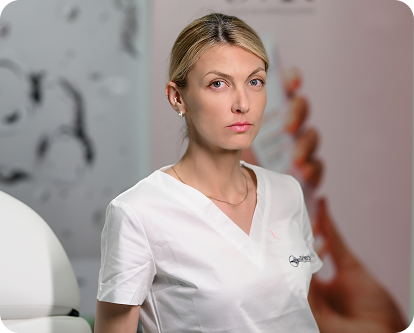
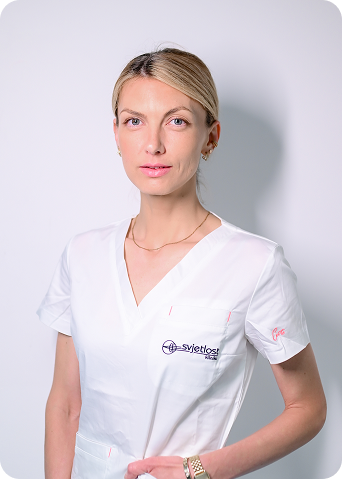
Mateja Jagić, MD, PhD
Additional Non-Surgical Treatments
Injectable treatments – dermal fillers, biostimulators, and biomodulators
Injectable treatments represent an important complement to eyelid surgeries because they affect tissue quality, volume, and the maintenance of results at a level not achievable surgically. They are applied based on a doctor’s recommendation, depending on the patient’s individual needs.
Dermal fillers based on hyaluronic acid replace lost volume in the under-eye area and temples, fill the tear trough, and alleviate the shadow caused by fat tissue atrophy. In combination with blepharoplasty, they can prolong the youthful appearance of the ocular region and reduce the need for repeated surgical procedures. The effect lasts 9–18 months, depending on the type of product.
Biostimulators (e.g., Sculptra, Radiesse, Profhilo) stimulate the body’s own collagen production and improve skin quality at a deeper, structural level. Unlike dermal fillers, which immediately restore volume, biostimulators work gradually – improving the firmness, density, and tone of the skin in the ocular region over several weeks to months. They are particularly useful in maintaining results after blepharoplasty and preventing recurrent tissue weakening.
Biomodulators (e.g., Juvéderm Volite, Restylane Skin Boosters) are preparations applied via intradermal injections that intensely hydrate and revitalize the skin from within. They improve the elasticity, radiance, and texture of the skin in the ocular region and are particularly effective as skin preparation before surgical procedures or as post-recovery care. The treatment does not change volume or shape but acts at the skin level itself.

Removal of Tumors Around the Eye
Eyelid tumors need to be taken seriously, just as they would anywhere else on the body.
Most often, these are benign changes such as cysts, warts, or inflammatory conditions, which can be successfully treated with medication or simple surgical procedures.
In some cases, changes can be malignant. The most common are basal cell and squamous cell carcinoma, and less frequently, melanoma. Such changes require timely and precise surgical treatment to prevent their spread.
Due to the sensitivity of the area around the eye, the procedure is performed very carefully, with maximum preservation of surrounding structures. If necessary, reconstruction is also performed to maintain proper eyelid function and a natural aesthetic appearance.
The procedure is most often performed under local anesthesia. The first follow-up is after seven days, when patients can usually return to daily activities.
07
Botox Treatments
Botox, or botulinum toxin, is a neuromuscular agent that acts by preventing the release of acetylcholine at the neuromuscular junction, thereby causing muscle paralysis. In ophthalmology, it has been used for over 40 years, initially in the treatment of strabismus, then blepharospasm (involuntary spasms of the orbicularis oculi muscle, which can be so severe that patients cannot open their eyes at all and see). It is also used for shortening of the eyelids and eye-moving muscles caused by thyroid disease (thyroid eye disease) or excessive tearing.
For the past ten years, the use of Botox for cosmetic purposes has been approved. Given its effect on muscles, it is also applied for aesthetic purposes because paralyzing facial muscles leads to the smoothing of mimic wrinkles. Botox is injected into the muscle to prevent the formation of wrinkles that arise from repeated action of that muscle. Patients feel the effect a few days after application, and the effect of the injection lasts 4-6 months, meaning the treatment needs to be repeated. It is most commonly administered in the area between the eyebrows, around the outer corner of the eye, below the outer edge of the eyebrow, and the forehead.
Dermal fillers are used to correct static wrinkles that arise due to aging. In ophthalmological practice, hyaluronic acid is most commonly used, given its similarity to natural skin components. It is most often applied deep beneath the skin, usually in sunken areas directly under the eye. Their effect lasts from 6-12 months. For a longer effect, fat tissue transfer is performed. After the application of Botox or fillers, a person can immediately return to their daily activities.
08
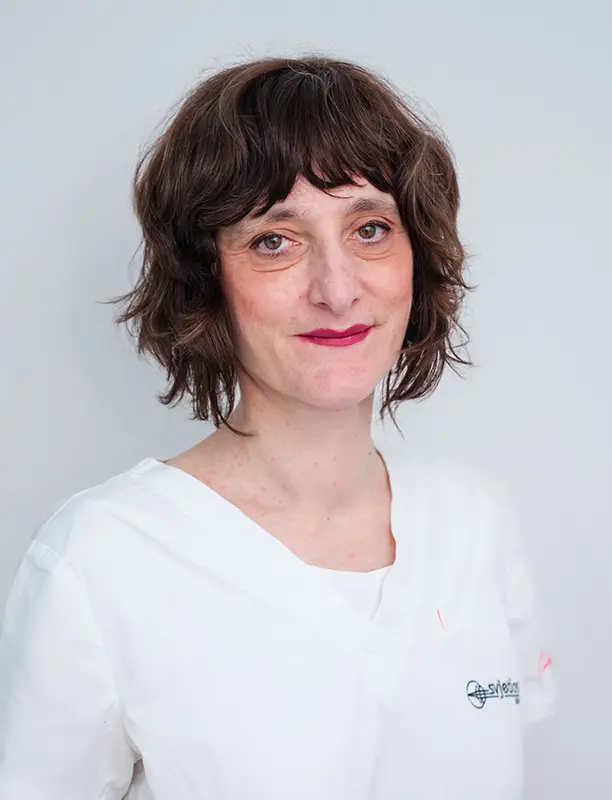
Your medical team – our physicians

09