




Cataract
I have a cataract and my vision is becoming increasingly blurred.
01
What is a cataract?
A cataract is one of the most common eye conditions in older adults and occurs in 70% of people over 75 years of age.
It develops as a result of natural aging, when the eye’s lens gradually becomes clouded.
Although most commonly associated with aging, cataracts can also develop due to trauma, metabolic diseases (diabetes, galactosemia), medication use (e.g., corticosteroids), complications of other eye conditions (uveitis, glaucoma), or as part of certain syndromes (e.g., Down syndrome).
In the early stages, vision can sometimes be improved with glasses, but as the cataract progresses, surgery becomes the only effective solution.
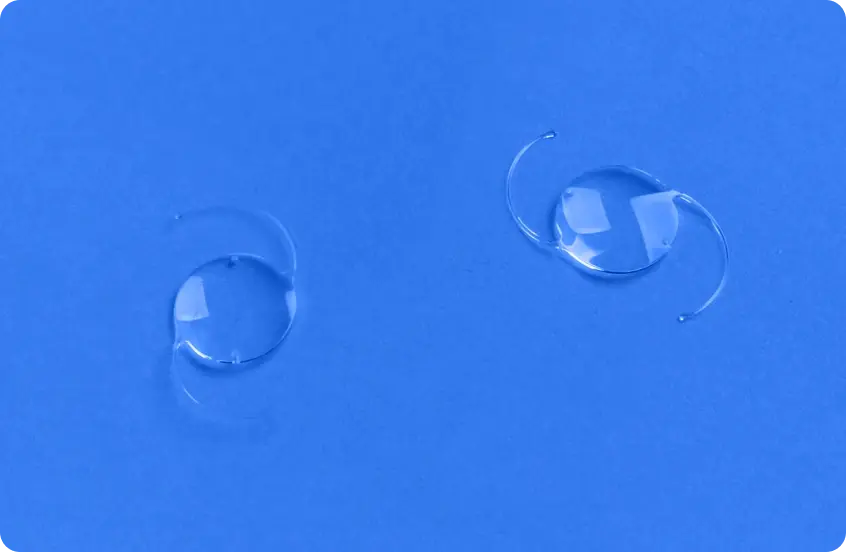
The procedure involves removing the clouded lens and implanting an artificial intraocular lens, which:

Restores clear and sharp vision

Reduces glare and improves contrast

Facilitates reading, watching TV, and driving

Eliminates disturbances such as double vision

Provides a long-term solution to cataracts
For optimal results, we use advanced IOL Master technology for precise calculation of intraocular lens power.
02
Is this procedure for me?
If you notice that your vision is gradually deteriorating and that daily activities are becoming difficult despite wearing glasses, it is possible that a cataract is the cause of your symptoms. Surgery is a simple and effective way to regain clear vision and improve your quality of life.
Cataract surgery may be a good choice if:
Your vision is blurred and impairs daily activities
You have difficulty reading, driving, or watching TV
You notice glare, reduced contrast, or double vision
Glasses no longer provide satisfactory vision
Your vision is worse in low light or at night
You want a permanent solution for better and clearer vision
The examination for cataract surgery includes:
- Assessment of visual acuity and intraocular pressure
- Biomicroscopic examination of the eye
- Pupil dilation for detailed analysis of the lens, optic nerve, macula, and retina
- Calculation of intraocular lens power using the IOL Master, and if necessary, ultrasound A-scan
- Corneal topography imaging for precise determination of astigmatism and any irregularities (especially important for multifocal and toric lens implantation)
- OCT of the macula and optic nerve to detect hidden conditions
- Ultrasound of the eyeball in cases of dense cataracts
- Measurement of corneal endothelial cells to ensure surgical safety (this is important because endothelial cells help the cornea recover and clear after surgery; if there are too few, the procedure uses additional protection with a dense gel—viscoelastic—to avoid permanent vision damage)
- Discussion with the patient about the type of intraocular lens to be implanted
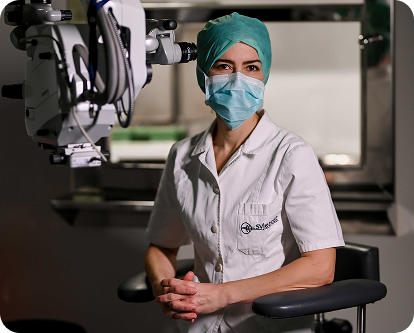
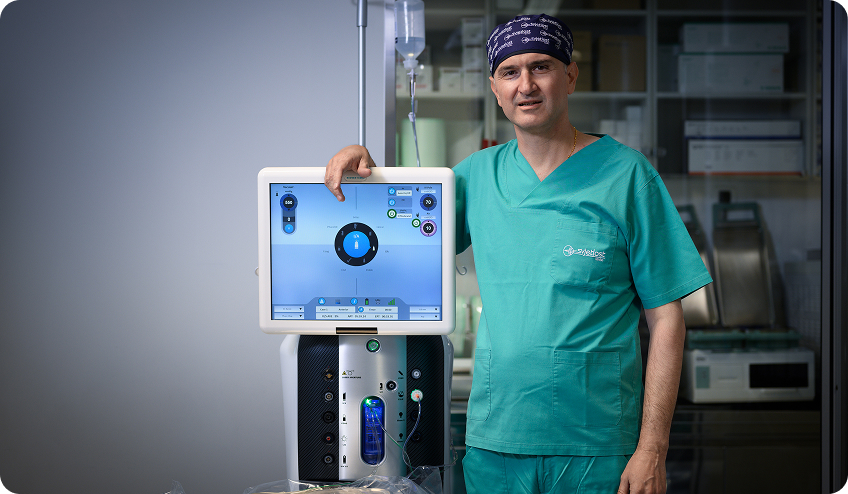
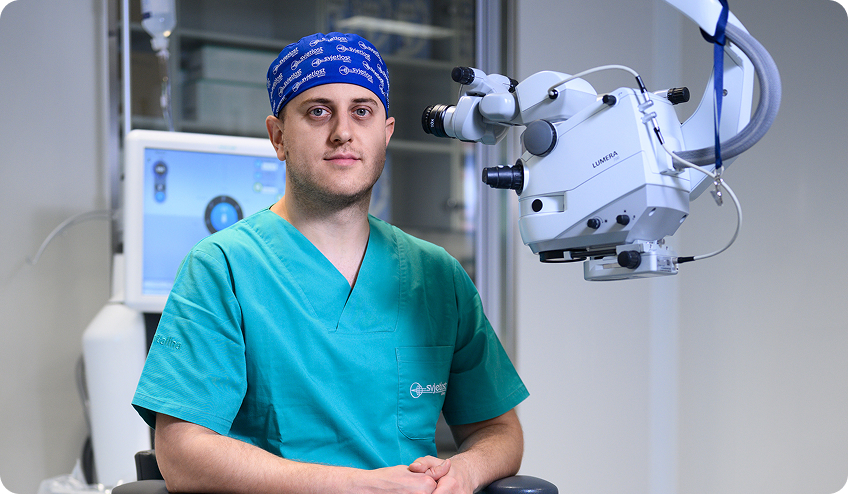
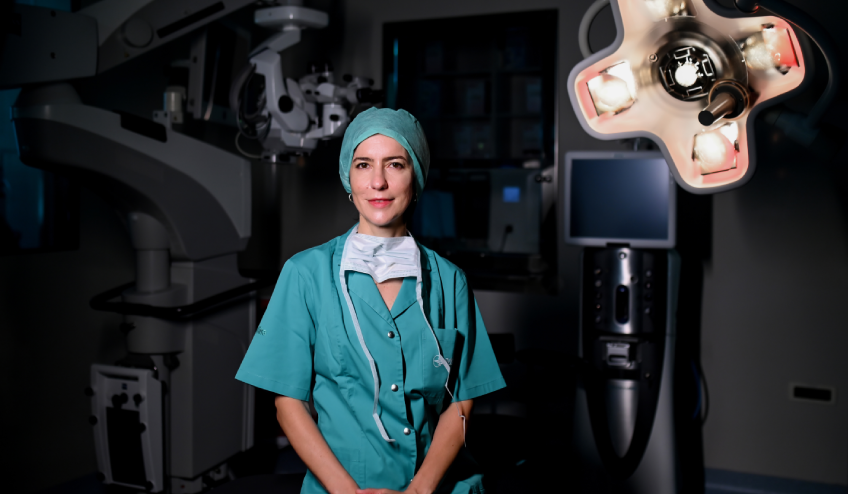
Prof. Maja Bohač, MD, PhD
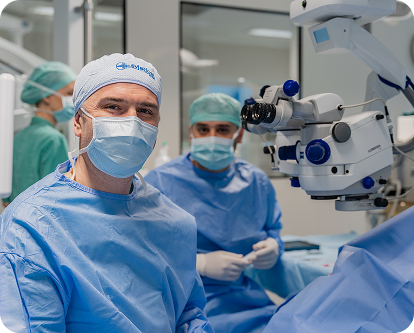
Krešimir Gabrić, MD and Ante Barišić, MD, PhD
Preparation before surgery includes:
Complete blood count (CBC)
Blood glucose measurement
Erythrocyte sedimentation rate (ESR)
Electrocardiogram (ECG)
03
Types of intraocular lenses
Monofocal and toric intraocular lenses
Monofocal intraocular lenses have a single focus and provide the patient with good distance vision without glasses, but glasses are required for near vision (or vice versa if the patient prefers). If the patient had astigmatism before surgery (a refractive error caused by irregular corneal curvature), after surgery they will need to wear glasses with cylindrical lenses for both distance and near vision.
Implanting a toric monofocal lens during surgery in patients with astigmatism achieves good distance vision, while glasses are needed for reading. Monofocal lenses can be aspheric or spherical. Aspheric lenses correct spherical aberrations and provide patients with sharper vision in low-light conditions, especially for night driving, and are suitable for active patients.
Multifocal intraocular lenses
With technological advances, multifocal intraocular lenses have been developed with 2 or 3 focal points, enabling patients to see well at different distances without glasses. Most multifocal lenses are bifocal. They provide good distance vision and good near vision, but slightly reduced vision at intermediate distances (80-100 cm).
The latest generation of multifocal lenses are trifocal lenses, which, in addition to good distance and near vision, also provide good intermediate vision, which is particularly important for patients who work extensively on computers. With this lens, patients can read newspapers and books, shave or apply makeup, look at their phone, work on a computer, watch TV, drive, engage in sports, and perform all other daily activities without glasses.
TECNIS PureSee™ IOL
TECNIS PureSee™ IOL is designed for patients who lead active lives and want clear vision at a range of distances – day and night, without depending on glasses.
It addresses the unmet demands of modern patients who lead active lives and require clear vision at various distances.
Svjetlost Eye Clinic is among the leading centers of ophthalmic excellence in the world for implanting PureSee lenses for reading correction, by Johnson & Johnson.
TECNIS PureSee™ IOL is an intraocular lens for presbyopia correction that provides high-quality vision day and night.
This lens uses advanced technology to ensure excellent distance and intermediate vision, with functional near vision, reducing dependence on glasses.
04
Procedure and recovery
What does the procedure involve?
Cataract surgery is today one of the safest and most frequently performed surgical procedures in the world.
Phacoemulsification lens extraction (PHACO) with intraocular lens (IOL) implantation is the gold standard in cataract surgery. It is a surgical procedure in which the clouded lens (cataract) is removed through an incision of 1.8-2.75 mm using an ultrasound probe, and a clear artificial lens is implanted. Thanks to the minimal incision, the wound heals quickly and does not require suturing.
Cataract surgery is performed under local anesthesia using anesthetic drops.
It is painless and takes 10-15 minutes.
Cataract surgery carries no health risk and can be safely performed on elderly and ill patients.
The patient goes home 15 minutes after surgery. If cataracts are present in both eyes, surgery on both eyes can be performed on the same day.
What does recovery look like?
Approximately fifteen minutes after cataract surgery, the patient goes home and should avoid strenuous activity that day.
The first examination is the next day, followed by a follow-up examination after 7 days and after one month, when glasses are prescribed if needed. Just a few days after cataract surgery, the patient can return to work and normal life.
It is necessary to take the prescribed therapy (antibiotic/corticosteroid drops and ointment). Washing with tap water is prohibited for the first three days; avoid rubbing the eye, excessive bending, and lifting heavy objects for the first month. Exercise and similar activities can begin 2-3 weeks after surgery, depending on the patient’s age and exercise intensity.
Thanks to advances in technology and intraocular lens design, cataract surgery today, in the hands of an expert surgeon, is an effective, safe, fast, and painless procedure after which the patient can resume normal daily activities within 3-5 days.
05
Your medical team – our surgeons

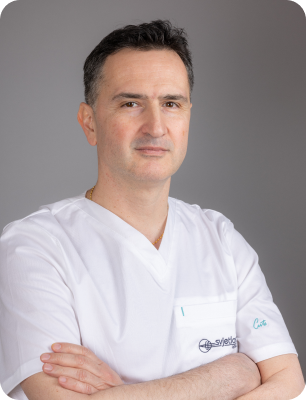
Ophthalmologist
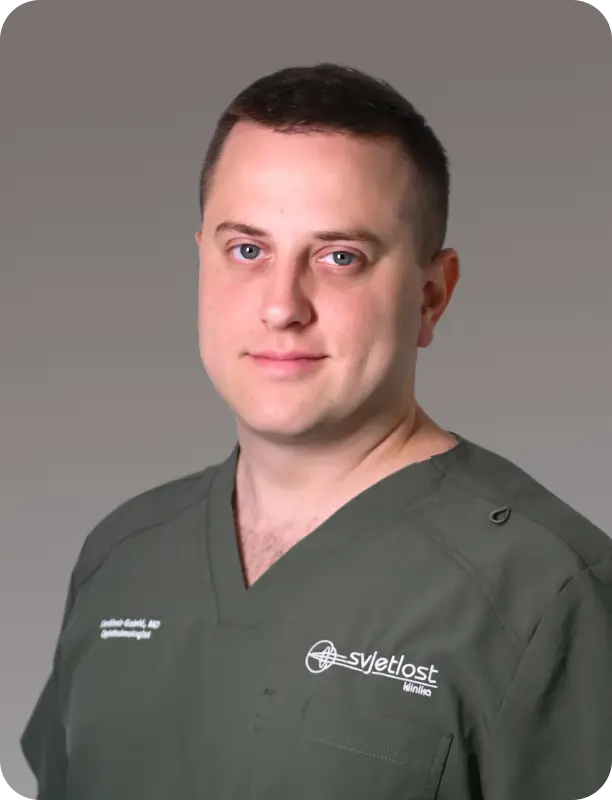
Member of the Management Board

Ophthalmologist
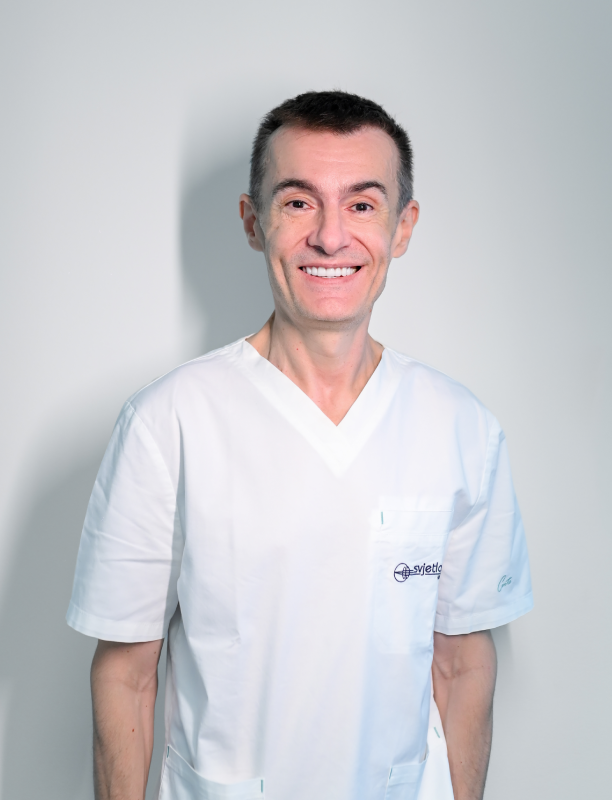
Ophthalmologist
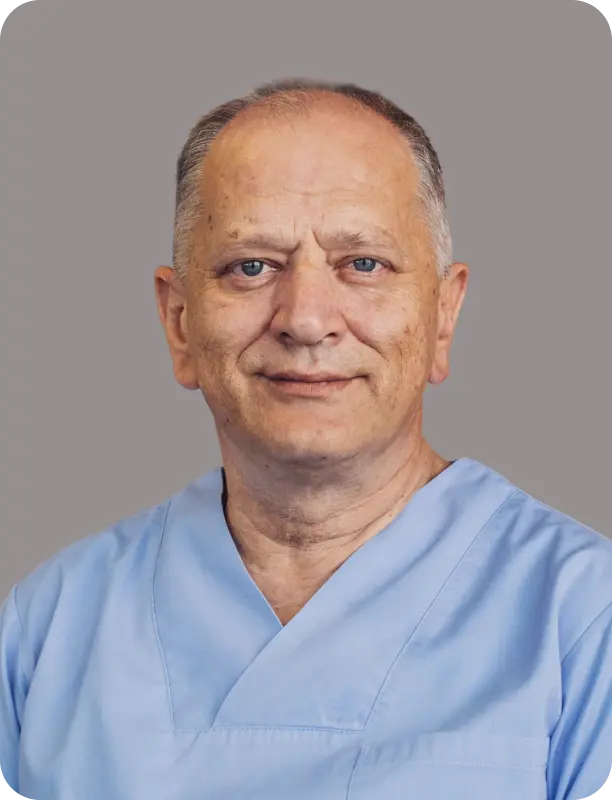
Founder of Svjetlost Eye Clinic
06