News
16th CSCRS International Congress
The opening day of the congress featured awards for Professor Michael Mimouni, Dr Barbara Parolini, Professor Lejla Vajzović, Dr Marco Sales-Sanz, Professor Nikica Gabrić and Svjetlost Clinic, the launch of a Croatian textbook on refractive surgery, and lectures on the 3D-printed cornea.
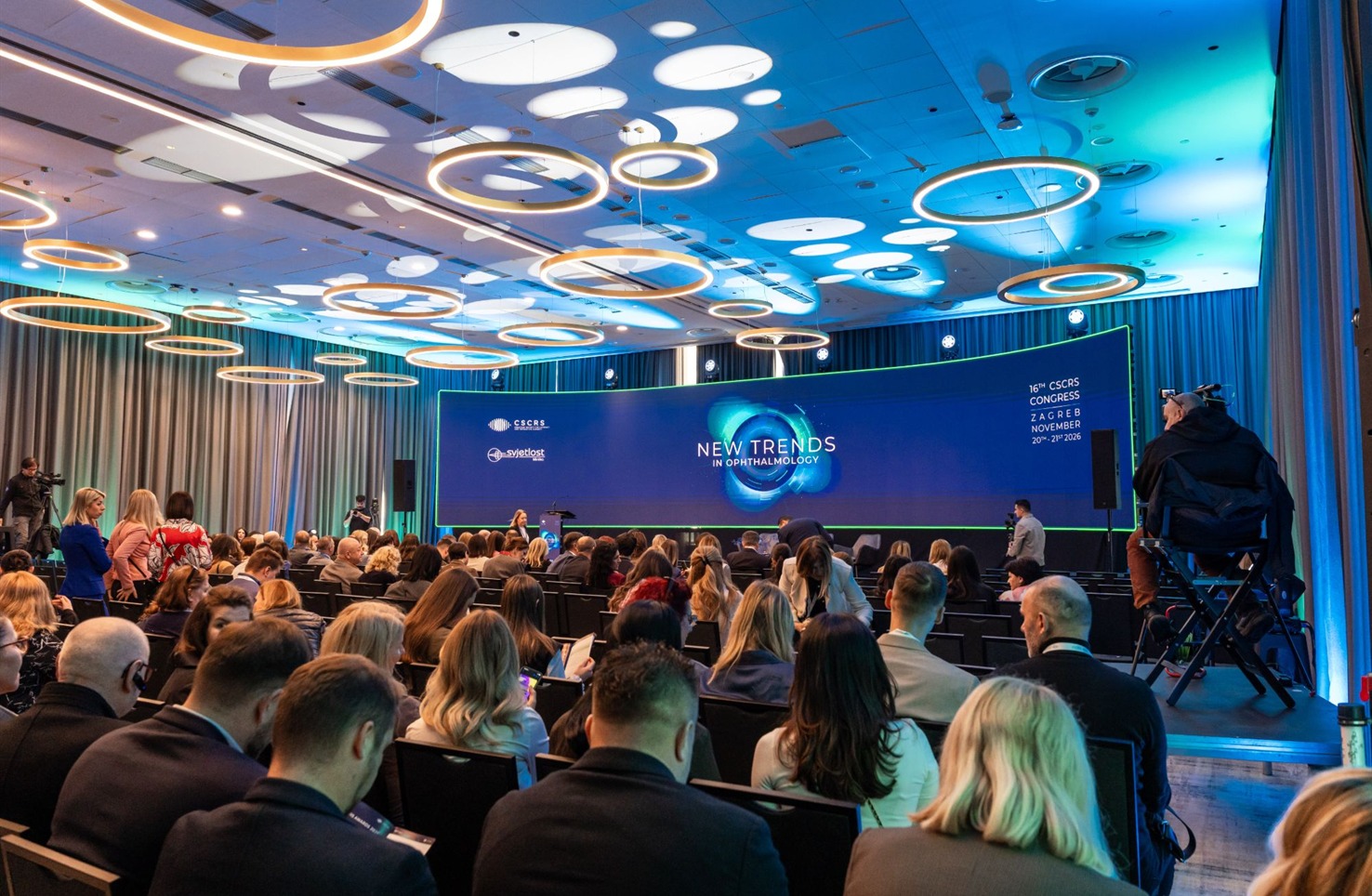
Svjetlost Eye Clinic and the Croatian Society of Cataract and Refractive Surgery (CSCRS) have opened the 16th “New Trends in Ophthalmology” congress in Zagreb. The two-day meeting at the Hilton Garden Inn has brought together 72 speakers from 15 countries.
Day one featured international awards, new research findings and first-hand experience from the operating theatre. Alongside the lectures, physicians took part in hands-on workshops and discussions of challenging cases. Attendance is free of charge for physicians.
Svjetlost becomes the world’s first SING IMT Centre of Excellence
Samsara Vision presented Professor Nikica Gabrić with the Excellence in IMT Implantation Award in recognition of his work implanting SING IMT telescopic lenses. Svjetlost Clinic was also certified as the world’s first SING IMT Centre of Excellence and Training Centre.
The award recognises both the clinic’s surgical outcomes and its role in training other surgeons in the procedure.
“This award belongs to the team, not to me personally. It is also a commitment: every patient must receive the same high standard of care,” said Professor Nikica Gabrić.
Telescopic lenses are intended for selected patients with advanced macular degeneration and severely impaired central vision. The miniature telescope is implanted in one eye, where it magnifies the image and helps the patient make better use of the healthy areas of the retina. It does not treat the disease itself, and patient selection and visual rehabilitation are key parts of the treatment.
Professor Nataša Drača explained how severely this type of vision loss can affect everyday life.
“They cannot function independently, they cannot read or write a message, and they cannot see what they are eating,” she said of patients with severe vision loss caused by geographic atrophy.
“It is a telescope-shaped implant placed inside the eye. With this implant in one eye, patients can function again: they can read, watch television and live independently,” she said, describing the potential benefits of the procedure.
At a workshop hosted by Samsara Vision and Svjetlost Clinic, Professor Nataša Drača presented Croatia’s first experience with the procedure. Greek surgeon Konstantinos Kakoulidis shared his surgical experience, and optometrist Foteini Lymberopoulou spoke about how patients adapt to life with the telescope.
Access to the procedure in Croatia is being expanded through a dedicated programme of the Croatian Health Insurance Fund (HZZO).
“This is a pilot project led by Svjetlost, with the participation of University Hospital Centre Zagreb, Sveti Duh University Hospital and University Hospital Centre Split. These four centres will implant SING IMT telescopic lenses,” said Professor Nikica Gabrić.
First Croatian textbook on refractive surgery launched
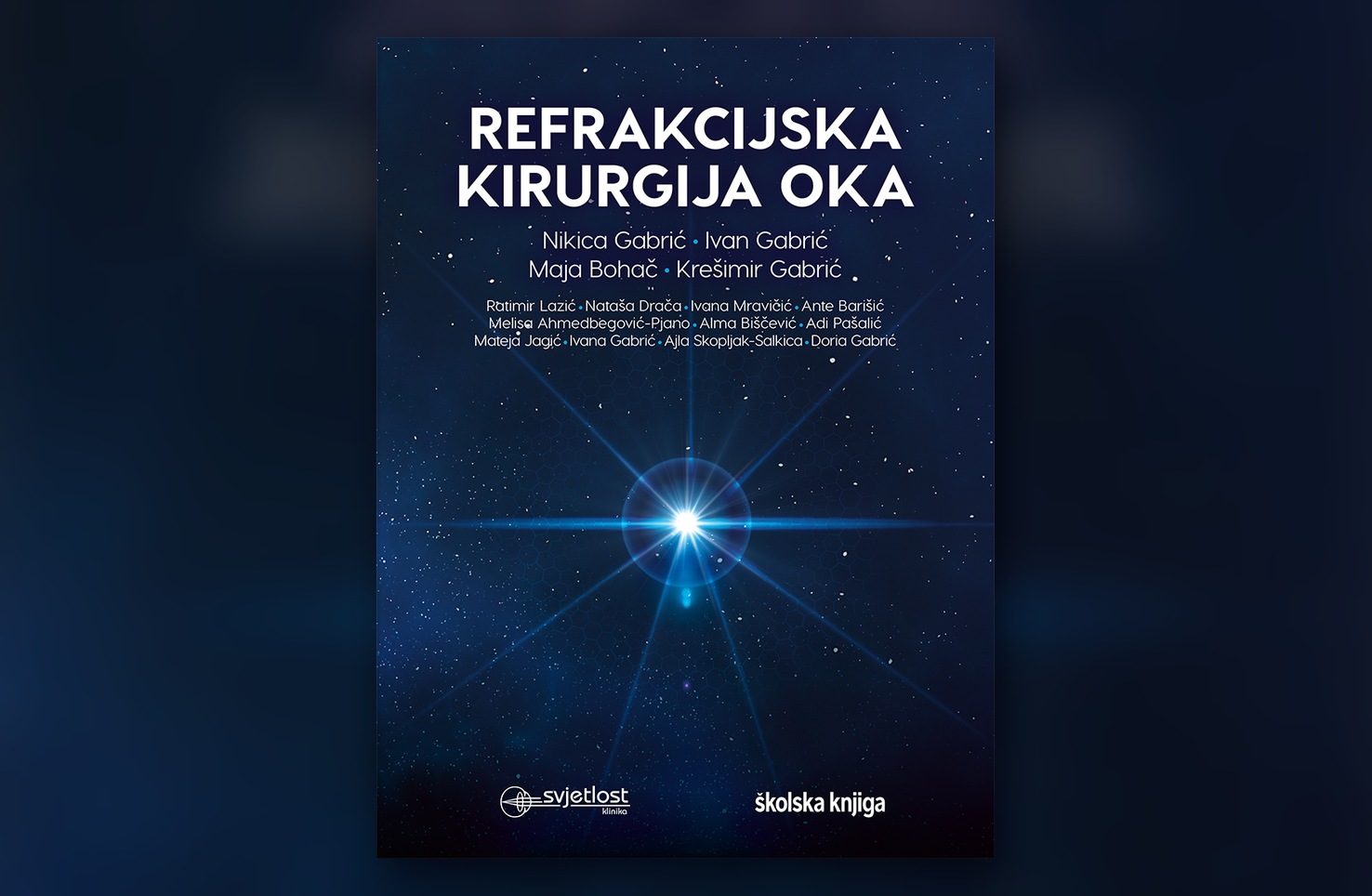
The opening of the congress also saw the launch of the textbook Refractive Surgery (Refrakcijska kirurgija), published by Svjetlost Clinic and Školska knjiga. It is edited by Professor Nikica Gabrić, Professor Maja Bohač, Dr Ivan Gabrić and Dr Krešimir Gabrić, together with their co-authors.
The book draws on the experience of physicians who use the methods it describes in their daily practice. It brings together the generation that introduced laser vision correction to Croatia and the surgeons who are now helping to develop new devices and procedures. Every congress participant will receive a copy.
Retina: new therapies and more precise surgery
The retina programme was hosted by Professor Ratimir Lazić, Head of the Retina Department at Svjetlost Clinic. At his invitation, the programme featured Dr Barbara Parolini from Italy, Professor Şengül Özdek from Turkey and Professor Lyndon da Cruz from Moorfields Eye Hospital in London.
“For many years I have had extensive contacts in the retina community, both in the United States and in Europe. The fact that such prominent figures, who speak at major international meetings, accept our invitation to come to our small country and take part as our friends and colleagues shows that, beyond good professional relations, we have also built real friendships. It also shows that they respect Svjetlost as an institution, which is why they are always glad to attend our symposia,” said Professor Ratimir Lazić.
Professor Lyndon da Cruz spoke about robotic surgery, machine sensing and cell therapy for degenerative retinal diseases. Professor Şengül Özdek presented on paediatric vitreoretinal surgery, and Dr Majda Hadžiahmetović from the United States on screening for diabetic retinopathy.
Dr Barbara Parolini lectured on the use of the Tutopatch graft in retinal surgery and on the potential of the macular buckle for damage associated with high myopia. She received the Visionary Leadership Award.
In the Croatian part of the programme, Professor Ratimir Lazić spoke about the use of methotrexate to treat proliferative vitreoretinopathy, a serious complication of retinal detachment.
Professor Lejla Vajzović on preserving and potentially restoring vision
Professor Lejla Vajzović of Duke University presented the development of longer-acting retinal therapies, from tyrosine kinase inhibitors to gene therapy.
“From gene and cell therapy to sustained drug delivery and new surgical approaches, I am actively involved in translating scientific discoveries into clinical practice,” she said.
“We are no longer talking only about slowing vision loss, but about preserving vision and perhaps even restoring it.”
Professor Lejla Vajzović received the Invaluable Contribution to Ophthalmic Education and Excellence Award.
She first came to Svjetlost Clinic more than twenty years ago as a young resident. The professional relationships she built at the time have grown into long-standing collaborations and friendships.
“Coming back and receiving this award from the community that welcomed and inspired me at the start of my career feels like coming home,” she said.
3D-printed cornea: results from the first patients
Professor Michael Mimouni of Rambam Health Care Campus presented new approaches to treating the inner layer of the cornea, including Precise Bio’s 3D-bioprinted implant, PB-001.
When the cells of this layer stop working properly, the cornea can swell and become cloudy, causing vision to deteriorate. Treatment often requires a transplant of donor tissue, which is in short supply.
“The idea is to grow corneal cells from a single donor in the laboratory and print them onto a thin implant. This way, one donor can help many patients rather than just one,” explained Professor Michael Mimouni.
“We now have one-year follow-up results for our first two patients. Both can see well, and for them it has been a turning point.”
The clinical trial is still ongoing, and if the method proves successful, it could help ease the shortage of donor corneas.
Professor Michael Mimouni received the Reimagining the Cornea Award.
“It is a true honour, especially because it comes from Dr Gabrić and the Svjetlost team. This award belongs to the whole team behind this work and to the patients who agreed to be the first,” he said.
Retinal therapies and complex surgical cases
The industry-sponsored retina symposia were designed and chaired by Professor Nataša Drača. At the Roche symposium, Dr Stefan Mladenovski spoke about dual inhibition with Vabysmo, and Dr Borivoje Ivezić led a workshop on intravitreal injections.
At the Bayer symposium “Eylea – Yesterday, Today, Tomorrow”, Dr Borna Šarić and Professor Damir Bosnar shared their experience, while Professor Nataša Drača spoke about future directions in treatment.
The afternoon video symposium featured complex surgical cases and discussions of surgical decision-making. Professor Ratimir Lazić presented an artificial iris implantation with lens fixation, as well as an intraocular lens exchange. Dr Krešimir Gabrić presented cataract surgery following eye trauma and the removal of a previously implanted ICL.
Oculoplastics: restoring function and a natural appearance
The final session of the day focused on orbital surgery and oculoplastics. Dr Marco Sales-Sanz from Spain gave the keynote lecture on orbital surgery and received the Restoring Form and Function Award.
“Advances in orbital surgery allow us to perform increasingly less invasive procedures,” he said.
“Our goal is not only to restore function, but also to restore a natural appearance to the eyes, as close as possible to how they looked before the disease.”
The programme also covered thyroid eye disease, the use of botulinum toxin, and functional, reconstructive and aesthetic surgery, along with case presentations on trauma and reconstruction after tumour treatment.
On day two, the congress continues with sessions on laser vision correction, corneal disease, intraocular lenses and dry eye.
Istražite naše novosti i stručne blogove
News & Expert advice
-
![]()
News
The World’s Leading Ophthalmologists in Zagreb
A cornea made on a 3D printer, a telescope implanted in the eye and a robot that operates on the retina. All of this is coming to Zagreb for the 16th Congress “New Trends in Ophthalmology”.
-
![]()
News
Svjetlost Eye Clinic Publishes the First Croatian Textbook on Refractive Surgery
On 20 November, the first day of the 16th Congress of the Croatian Society for Cataract and Refractive Surgery (CSCRS), “New Trends in Ophthalmology”, Svjetlost Eye Clinic will publish the textbook Refrakcijska kirurgija (Refractive Surgery).
-
![]()
News
Dr. Ivan Gabrić Speaks at SCHWIND DACH Meeting of Ophthalmologists from Germany, Austria and Switzerland
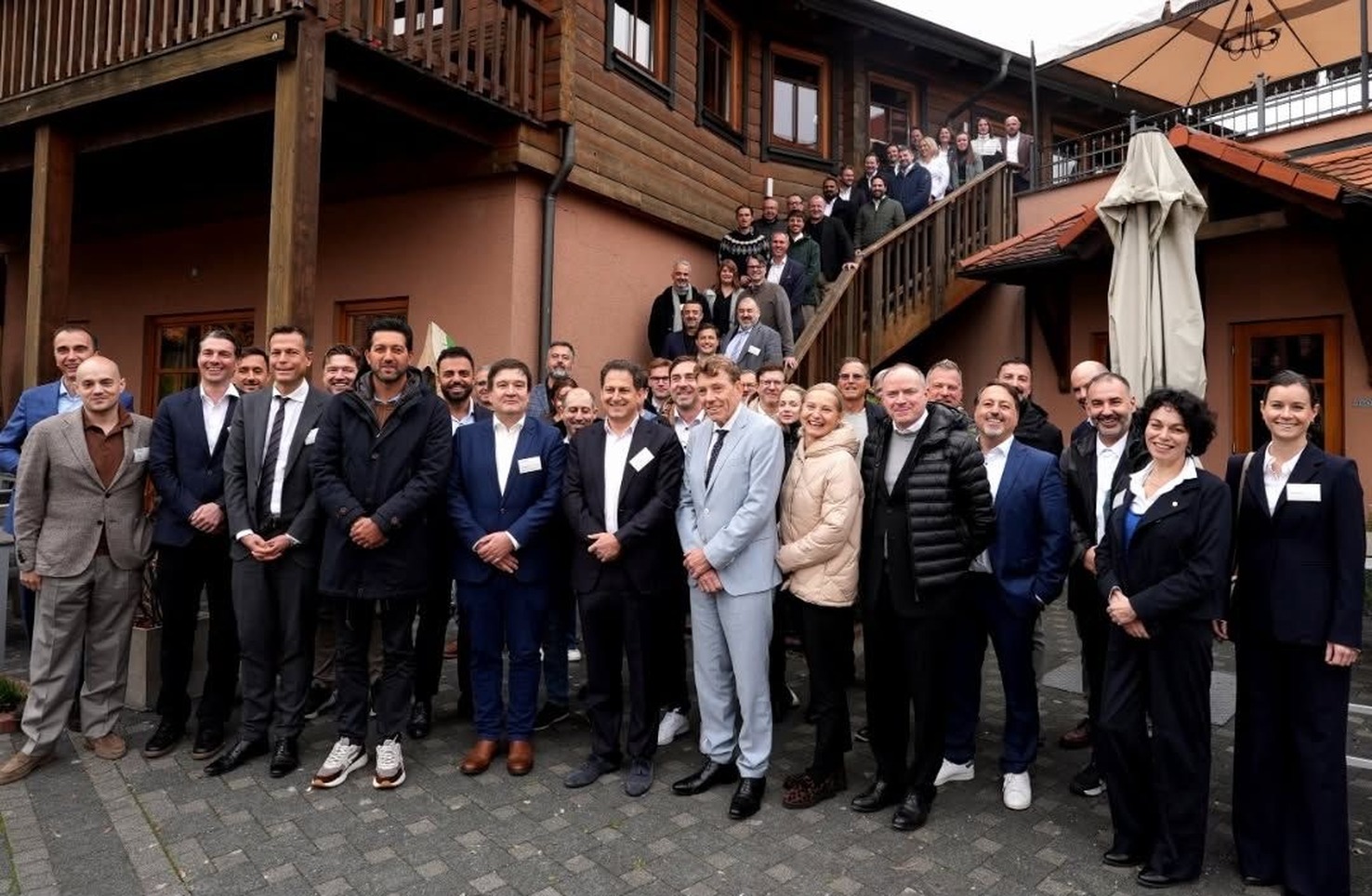
Dr. Ivan Gabrić of Svjetlost Eye Clinic was one of the speakers at the SCHWIND DACH User Meeting, a professional gathering of ophthalmologists from Germany, Austria and Switzerland who work with lasers made by the German company SCHWIND.