
News
Laser Vision Correction - A New Method for Even More Precise Surgery
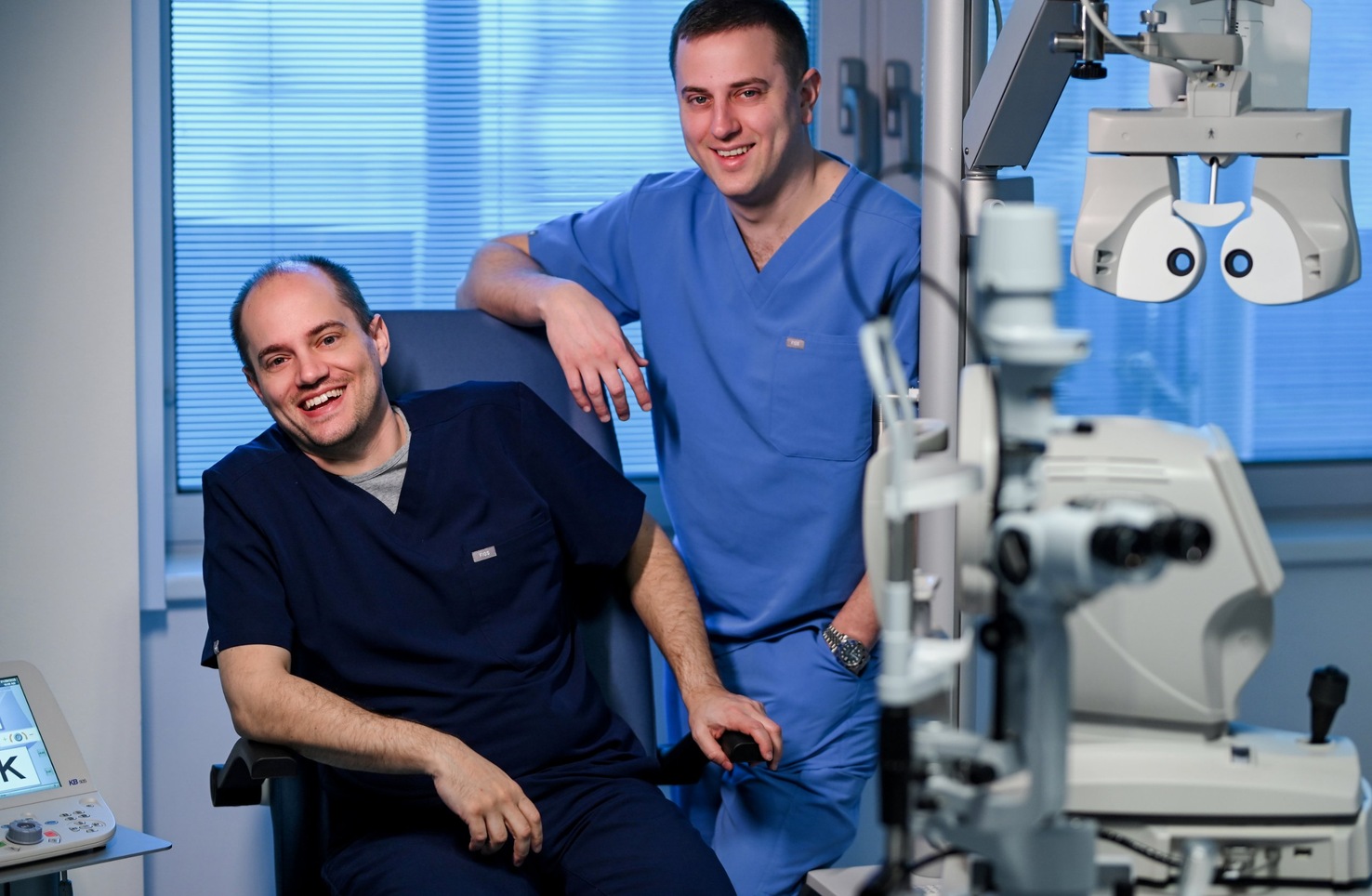
One of the paper’s authors is Dr Ivan Gabrić of Svjetlost Eye Clinic, alongside experts from the German company SCHWIND.
The respected scientific journal Translational Vision Science & Technology (TVST), published by the American association ARVO, has published a paper on a new method that makes laser vision correction even more precise. One of the paper’s authors is Dr Ivan Gabrić of Svjetlost Eye Clinic, alongside experts from the German company SCHWIND.
The paper describes the asymmetric transition zone (aTZ). It is a smart way of planning the procedure: the laser itself corrects small deviations in the position of the eye during surgery. Read the full paper.
Why is precise centration so important?
In laser vision correction, the laser must work exactly at the centre of the eye’s optics. If the treatment is even slightly off-centre, the patient may see worse at night after surgery, notice glare, or see rings (halos) around lights.
This matters especially in modern lenticule-based procedures (also known as SMILE or SmartSight). In these procedures, the eye is “docked” to the laser at the start. The laser then shapes and removes a thin lens of tissue from the cornea. If the patient looks slightly to the side or the eye rotates slightly during docking, that error stays “built into” the whole procedure. Even a shift of 0.3 to 0.4 millimetres can affect the quality of vision.
How does the new method work?
Imagine the eye cannot be positioned perfectly under the laser. Instead of moving the eye, the new method adjusts the treatment plan itself. In short:
- Before surgery, the exact centre of the treatment is determined.
- Once the eye is docked to the laser, a camera measures where the pupil actually is and whether the eye has rotated.
- The system calculates the difference between the planned and the actual position.
- The most important, central part of the treatment (the optical zone) is shifted so that it is exactly in the right place again.
The outer part of the treatment (the transition zone) takes on a crescent shape: slightly wider on one side and narrower on the other. This keeps the centre of vision perfectly centred, while the edge, where small deviations have less effect on vision, absorbs them.
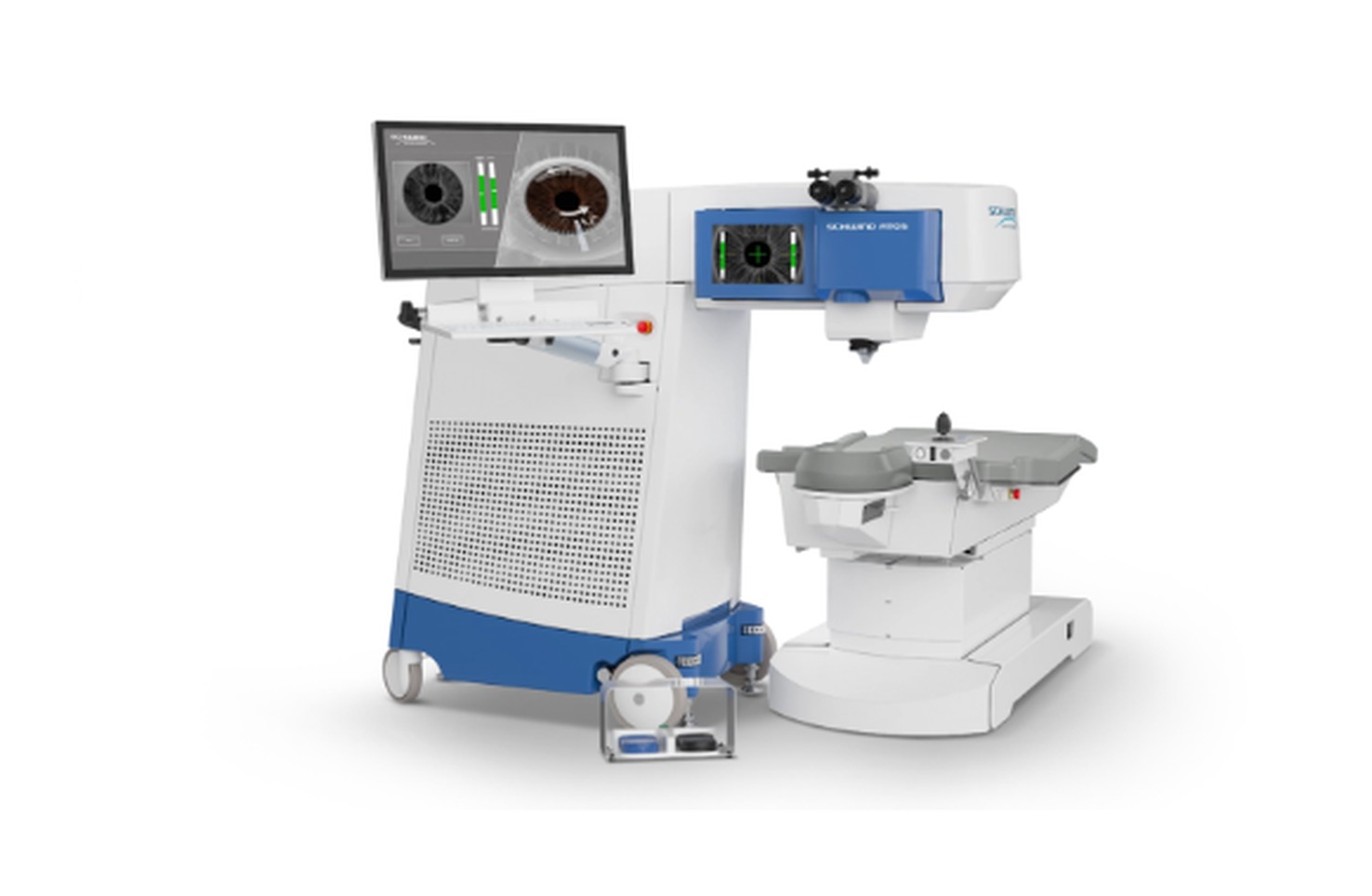
The method is already available in practice as part of the SmartSight NOVA programme on the SCHWIND ATOS laser.
What does this mean for patients?
According to the calculations in the paper, the new method offers several benefits:
- More accurate centring of the treatment, even when the eye is not perfectly positioned
- Lower risk of visual disturbances such as glare and halos around lights
- The same or less tissue removed than with a standard procedure
- Correction of both shifting and rotation of the eye
The authors estimate that the method makes the procedure about 3.4 times more tolerant of eye shifts than a standard procedure.
The method is already used in clinical practice. The paper describes the case of a 26-year-old woman with -2.75 dioptres of short-sightedness. During surgery, the system detected that her eye was shifted by about 0.3 mm and automatically corrected 0.2 mm of that shift. Measurements 16 days after surgery showed that the treatment was accurately centred and that no new optical irregularities had appeared.
Next steps
The new method is a simple, effective solution to the small deviations that can occur in any lenticule-based procedure. Both the theoretical model and the first clinical cases show promising results. The next step is larger clinical studies with longer patient follow-up.
Svjetlost Eye Clinic is proud to take part in developing technologies that make laser procedures even safer and more precise.
Istražite naše novosti i stručne blogove
News & Expert advice
-
![]()
News
Three-Day Complex Strabismus Surgery Programme Successfully Completed
The operations were performed together with Prof. Oliver Ehrt, MD, continuing the long-standing collaboration between Svjetlost Eye Clinic and LMU Klinikum in Munich.
-
![]()
News
SmartSight NOVA – A New Level of Precision in Laser Vision Correction
Flap-free lenticule surgery, now intelligently centred on your eye.
-
![]()
News
ACI Interview: Dr Ivan Gabrić & Dr Krešimir Gabrić
Patient trust built on high professional standards.