
Blog
You Could Develop Cataracts Much Earlier Than You Think
Ante Barišić, MD, PhD, talks to MISS7ZDRAVA about eye health in the digital age
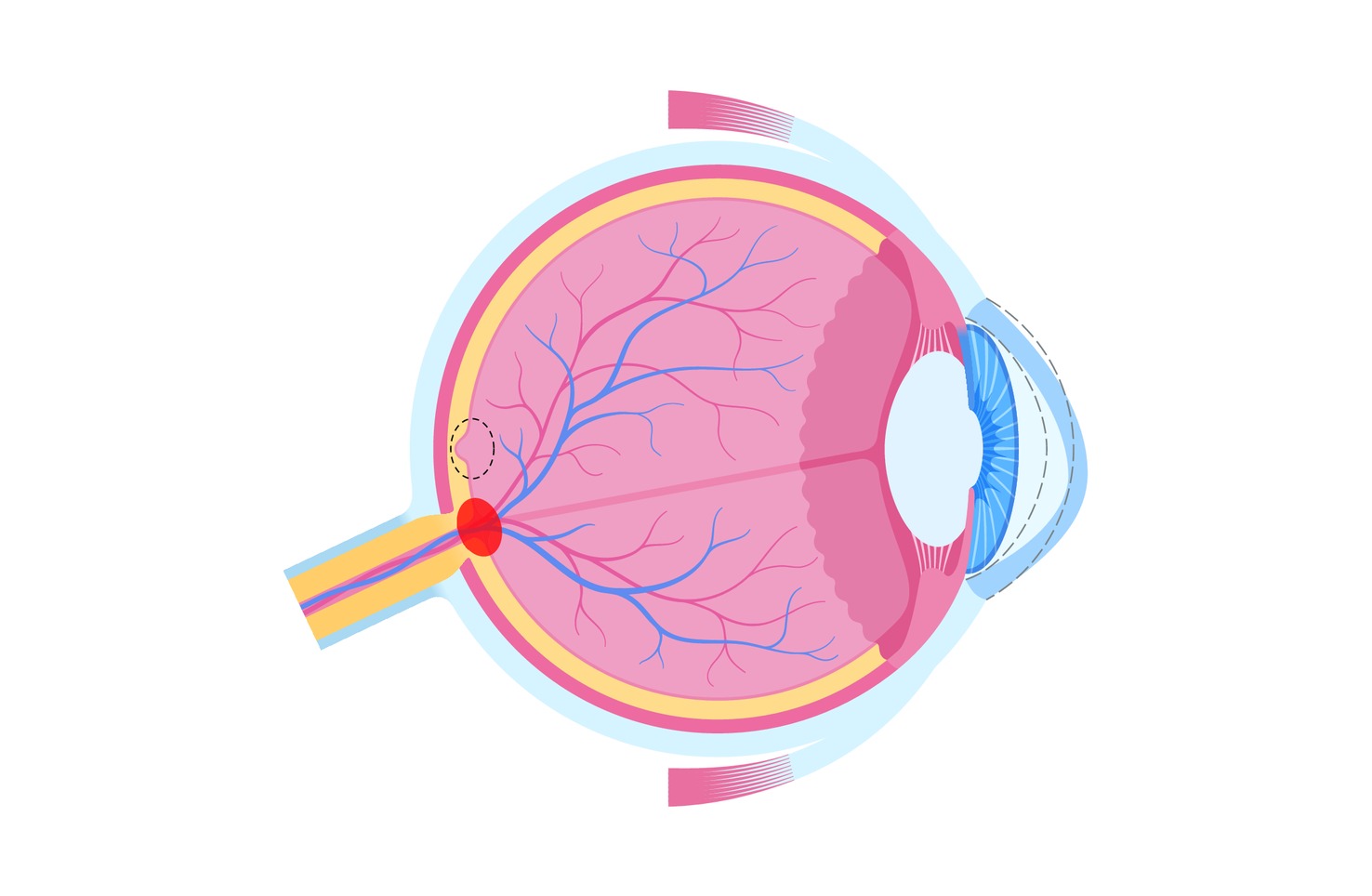
Cataracts are most often associated with old age, but they are increasingly appearing in people in their forties and fifties.
Although cataracts usually develop gradually, their symptoms can significantly affect everyday life, and many people initially put them down to tiredness or a change in their prescription. Blurred vision, changes in colour perception, glare and an increasingly frequent need for new glasses can all be signs of a cataract, that is, a clouding of the eye’s natural lens. Although it is often considered an inevitable part of ageing, a cataract can develop much earlier than we expect.
Why is it appearing in ever younger people, can long hours in front of screens and lifestyle habits affect its development, and why does the rule that a cataract must “ripen” before surgery no longer apply?
We spoke about this with Ante Barišić, MD, PhD, a specialist in ophthalmology and subspecialist in anterior segment surgery, who also explained what modern cataract surgery looks like, how long recovery takes and whether it is possible to live without glasses after the procedure.
The claim that practically all of us will get a cataract if we live long enough sounds rather dramatic. Why is it actually part of the natural ageing of the eye?
A cataract is a clouding of our natural lens. It forms because of changes in the metabolism of the lens itself, which most often happens in older age. That is why we say that in old age we will all have some degree of lens clouding. There are also other causes of cataracts: certain medications (corticosteroids), eye trauma, diabetes and radiation. Patients with high myopia develop cataracts earlier. There are also congenital cataracts in children, which must be recognised early so that surgery can allow vision to develop in young children.
You mentioned that you recently had a patient born in 1986. How often do you now see cataracts in middle-aged people, and what are the most common reasons they develop earlier?
I am increasingly operating on cataracts in younger patients. Apart from the causes I have listed, we don’t really know why people are getting cataracts at an ever younger age. Last week I operated on patients aged 51, 49, 43 and 40, which is not usual. Family history certainly plays a role, and we often hear that one of the parents also had cataract surgery at a younger age, but in most cases we cannot link it to any environmental factor. Long hours in front of screens have several negative effects on vision, such as increased dry eye and the rise of myopia in children, but we are not aware of any link with cataract development. Perhaps diet, lifestyle, smoking and alcohol consumption play a part, but we are not sure. Speaking of screen time, I think that in children, and partly in adults, it has a greater impact on psychological health, although we must not neglect the ophthalmological side either.
When a working person notices that their vision is getting worse, they will often put it down to tiredness or a change in prescription. Which symptoms may point specifically to a cataract?
There are certainly many working people whose vision is weaker because of an increasing prescription, especially reading glasses in their forties, or because of tiredness and dry eye. The symptoms of a cataract can generally be summed up as declining visual acuity: the image becomes unclear, colour perception changes, and double vision or shadows around objects are possible. Very often a cataract causes a change in prescription, so at first patients keep changing their glasses until even glasses no longer help. Patients often ignore the signs because they think the problems will go away, and the biggest problem is fear. I recently operated on a young, working woman under 50 who could see only light in one eye, meaning she could not even see her own hand in front of her eye. Because she was afraid of surgery, she waited until she had gone blind in that eye. The operation was successful and the very next day she had 100% vision, but she could have solved her problem long ago and made life easier for herself, and for us surgeons it is also much easier to operate on a cataract at an earlier stage. So don’t put off surgery the way people did some 40 years ago. Today, thanks to modern technology, a cataract should be operated on as early as possible. The risk of complications is lower, recovery is faster, and there is less trauma to the cornea and the whole eye. Fear of surgery is normal; this is the organ that is our most important link to the world around us. But we must not let that fear overpower us and put our vision and quality of life at risk. Patients often say they would rather lose all their other senses or a part of their body than their sight.
So waiting for a cataract to “ripen” is actually an outdated belief?
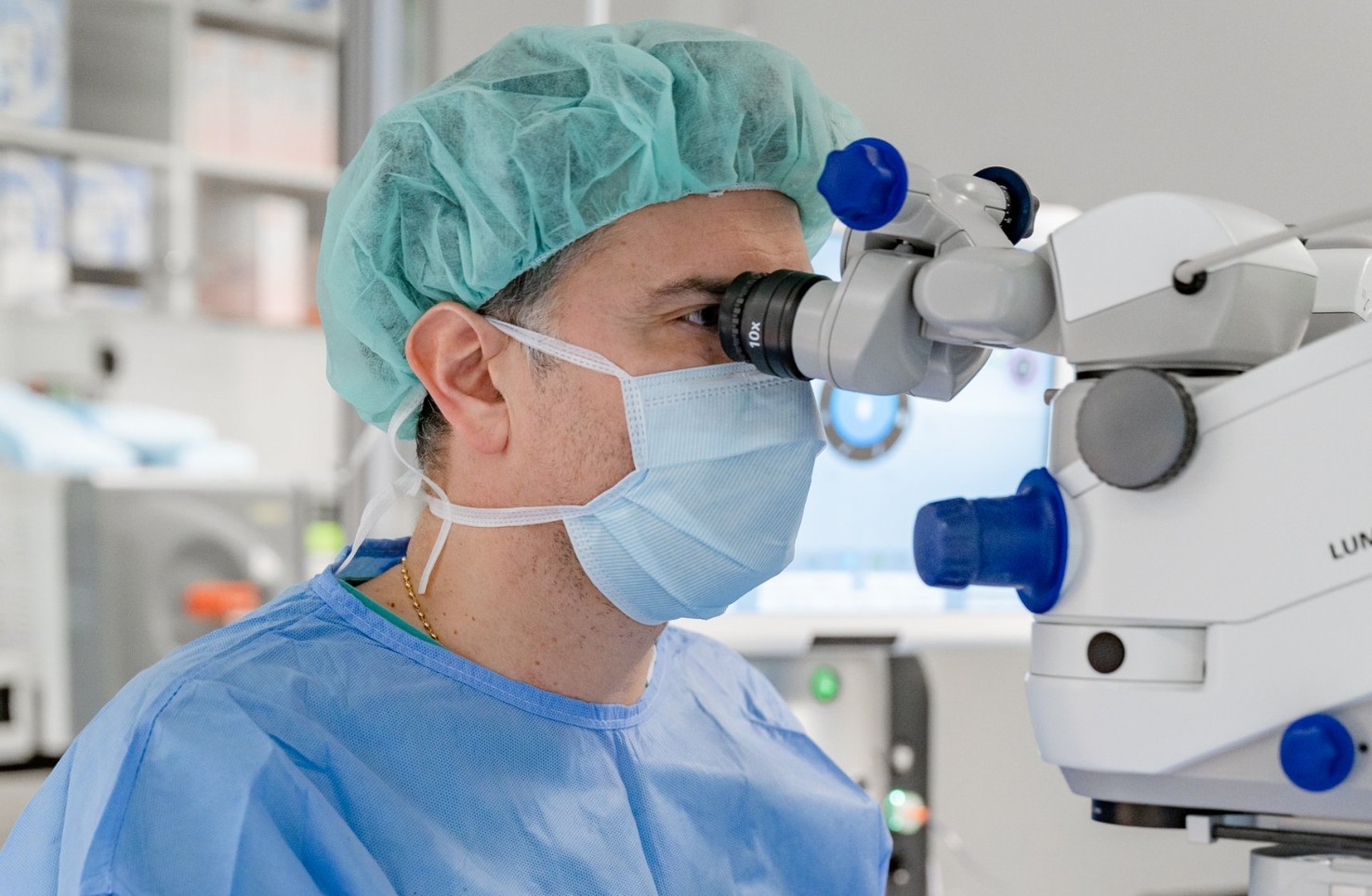
As I said, a cataract is best operated on as soon as it starts to affect the quality of your vision and your life. Waiting for a cataract to ripen is an age-old story, and today it is actually dangerous for the eye. Modern cataract surgery is performed through a 2.2 mm incision in the eye, and the cataract is broken up and suctioned out with an ultrasound probe. There is also laser-assisted cataract surgery, which I use in more complicated cases. The softer and less mature the cataract, the easier it is to remove, the less trauma there is to the eye, the shorter the operation, the lower the risk of complications and the faster the recovery. So don’t wait for your cataract to ripen.
Patients are often frightened by the very words “eye surgery”. From your perspective, what does the procedure look like: how long does it take, does it hurt, is the patient awake and what does preparation involve?
Cataract surgery is the most frequently performed procedure in all of surgery. Every eye has its own particularities and potential challenges, but the vast majority of operations go smoothly, with a success rate of over 99%. The operation takes about 10 minutes and is completely painless. Patients are awake and receive local anaesthesia in the form of eye drops. They are also given intravenous medication to help them relax. A so-called eyelid speculum, an instrument that keeps the eye open so they cannot blink, is placed on the eyelids. Patients often ask whether they will see what I am doing. They see only a moving light, which they often describe as outer space, different colours, a video game and so on. Most patients like to hear what I am doing because it calms them and takes their mind off their fear. During the operation it is very important to say a few times that everything is going well, that there are no problems, and that the patient is very calm and looking in the right direction. Things like that relax them and they become very cooperative, which helps the surgeon a great deal. Above all, good communication and conversation before and during the operation are extremely important. We need to listen carefully to patients to understand what troubles them and what their wishes, expectations and fears are. It is equally important to explain clearly and precisely what they can expect during and after the operation, what problems might arise and how we will prevent or treat them. That is how you gain the patient’s trust and are well on the way to a successful result. The total stay at the clinic is 2 to 3 hours, and patients go home after the operation.
Today, cataract surgery can also correct refractive error at the same time. What options do patients have, and how realistic is it to expect a life without glasses after the procedure?
In cataract surgery we remove the clouded lens and implant a new, clear artificial lens of the appropriate power. Monofocal lenses provide good distance vision without glasses, but patients still need glasses for near vision. So-called EDOF (Extended Depth of Focus) lenses have an extended range of vision and, in addition to distance, provide good intermediate vision (computer, car dashboard and the like) and allow reading of larger print, while glasses are still needed for small print. Multifocal lenses offer a high degree of independence from glasses in everyday activities, but they have some side effects in the form of light scatter when driving at night. Each patient should be approached individually, and together we decide which lens is optimal. A pre-operative examination is extremely important to determine the condition of the eye and any other diseases or limitations.
How soon after surgery does a patient start to see better, and when can they return to everyday activities such as computer work, exercise and driving?
Recovery of visual acuity depends on how hard the cataract we removed was. With mature, ripe cataracts recovery can take a couple of weeks, while with most cataracts the patient sees better on the very first morning or their vision recovers within a week. Of course, it also depends on the condition of the eye and any other diseases. Patients can drive, read, go out and work on a computer from the day after surgery, as long as it is comfortable. Even so, we usually recommend more rest and reduced activity in the first week. Cataract surgery weakens the tear film, that is, it increases dry eye, which slows recovery and causes stinging, scratchiness, a foreign-body sensation, redness of the conjunctiva and occasional blurred vision. It is important to use artificial tears so that the tear film recovers as quickly as possible. After a week patients can return to everyday activities and light exercise, and after a month all activities are allowed, including swimming, sports and so on. During recovery you must not press hard on the eye, and you should avoid smoky, stuffy and dusty rooms, possible blows to the eye (small children’s fingers are especially dangerous) and swimming pools.
Can we prevent cataracts or at least delay them in any way? How important are UV protection, not smoking, diet and regular eye examinations?
It is difficult to prevent cataracts. Everything you have listed falls under the general measures of responsible health behaviour, and we should follow them, not only for the sake of our eyes. Regular eye examinations are key to maintaining good vision. Glaucoma is a disease that damages the optic nerve and can lead to blindness, yet it has no symptoms at all; it is the so-called silent thief of sight. We can only detect it during an examination. Diabetes attacks the eyes and leads to severe damage to the back of the eye. All diabetics must come in for regular check-ups. Much of the responsibility for our health lies with ourselves. The leading causes of death, cancer and cardiovascular disease, can be treated much more successfully, with better outcomes, if they are detected at an earlier stage. So take care of your health at least as well as you take care of your car, which we have inspected once a year.
And finally, what would you say to people who have been noticing blurred vision, glare from lights or other changes for some time, but keep putting off an examination out of fear?
As with many things in life, we only appreciate good vision once we start to lose it. The beauty of my job is giving my patients their sight back. It makes them happy and satisfied. Many people lose their quality of life because of poor vision: they cannot work, cannot pursue their hobbies, read or play sports, cannot drive, stop going to the cinema and theatre, withdraw into their homes and stop seeing their friends. The joy and happiness that patients feel and show after successful cataract surgery and the return of their sight are the most beautiful part of my professional life. That is why I say ophthalmology is the most beautiful branch of medicine, because sight is almost as important as life itself. Don’t be afraid. Come in for an examination if your vision is getting worse, and don’t let fear take away the beauty of everyday life.
Read more at: https://miss7zdrava.24sata.hr/zdravlje/mrenu-mozete-dobiti-puno-ranije-nego-sto-mislite-oftalmolog-o-zdravlju-ociju-u-digitalnoj-eri-29555 – miss7zdrava.24sata.hr
Istražite naše novosti i stručne blogove
News & Expert advice
-
![]()
News
EASE – a new surface laser vision correction method at Svjetlost Eye Clinic
Svjetlost Eye Clinic now offers its patients EASE, the newest method of laser vision correction. EASE (Epithelial All-femtosecond Surface Excision) was developed by the German company SCHWIND eye-tech-solutions and is performed with the SCHWIND ATOS® laser.
-
![]()
News
Svjetlost Eye Clinic launches the international STELLAR clinical study
Svjetlost Eye Clinic is the sponsor of STELLAR, an international clinical study that will systematically follow the outcomes of transepithelial lenticule removal (TLR). TLR is a new laser method for correcting myopia and astigmatism, also known by its commercial name, EASE.
-
![]()
Blog
Keratoconus no longer means an inevitable corneal transplant
Advanced keratoconus treatments.