
News
ACI Interview: Dr Ivan Gabrić & Dr Krešimir Gabrić
“Without our father’s vision and passion, there would be no Svjetlost. Today we have clinics in Zagreb, Split, Sarajevo and Budva, and a team of several hundred people”, says doctor Krešimir Gabrić, while doctor Ivan Gabrić identifies the key challenge as maintaining standards of quality: “Being the best with teams spread across three countries means having protocols, quality control, in-house training and a professional culture that is consistently upheld regardless of who implements it or where.”
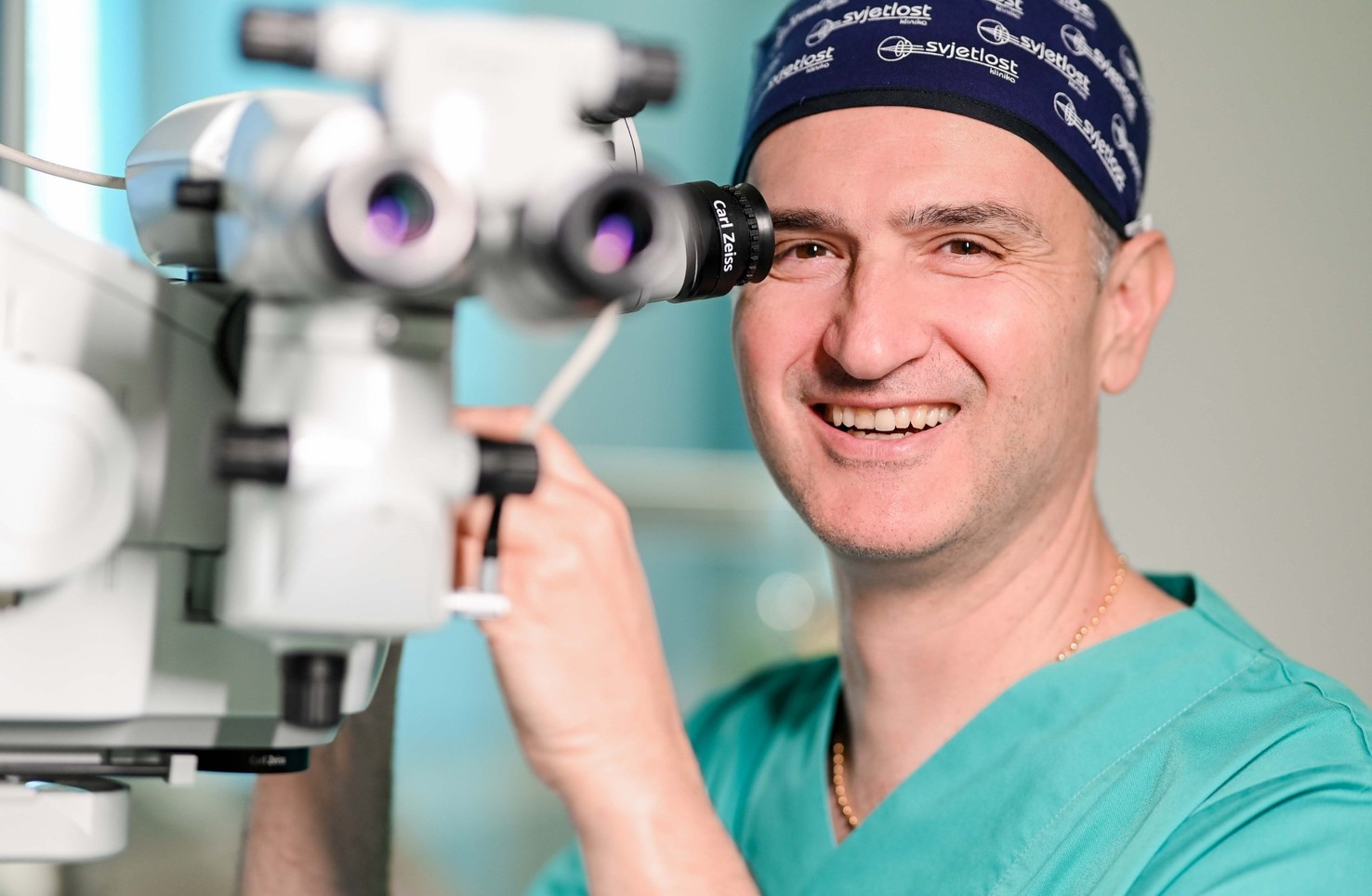
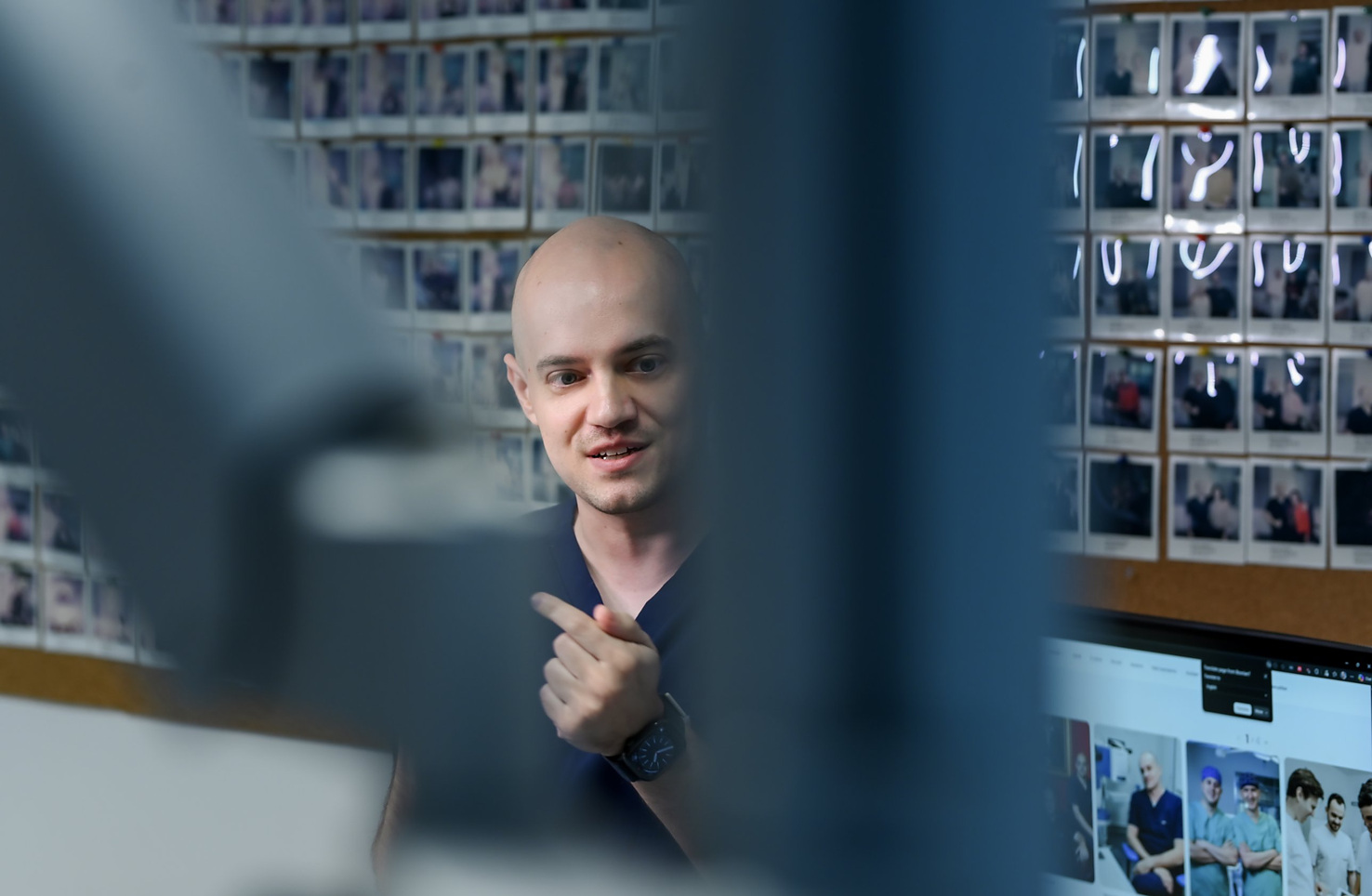
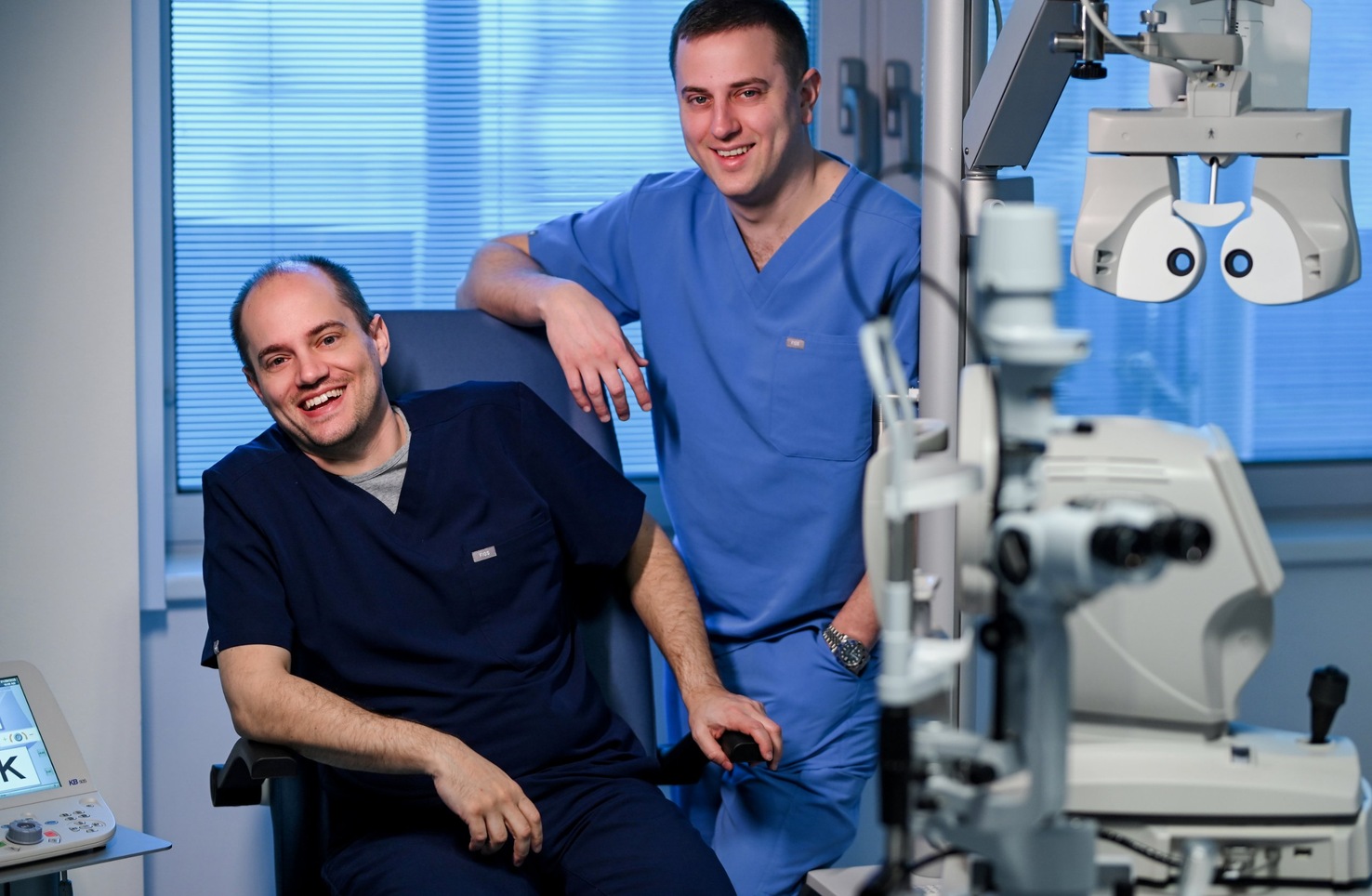
The Svjetlost Eye Clinic is the leading ophthalmology centre in the region, providing a comprehensive range of services. It was also Croatia’s first private university-affiliated clinic and is an internationally recognised brand. Its founder and director, Professor Nikica Gabrić, MD, PhD, a world-renowned eye surgeon, established the Svjetlost Eye Clinic almost thirty years ago. It is not unusual for children to follow their parents into medicine, and this was also the case with Prof. Gabrić’s sons, Ivan and Krešimir. Both are ophthalmologists, each highly accomplished in his own subspecialty, and, naturally, both work at the Svjetlost Eye Clinic. We spoke to them about growing up in a medical family and their decision to pursue medicine, about Svjetlost itself, and about ophthalmology today, as well as tomorrow — because, just like their father and like the Svjetlost Eye Clinic, they are always several years ahead of developments in the region.
Do you remember the early days of the Svjetlost Eye Clinic?
Krešimir: I remember Ivan and I spending weekends in our father’s practice when we were children. Once, I was sitting at the reception desk and started playing with correction fluid. I ended up erasing the names of all the patients who had appointments booked.
Patients, diagnostics, discussions of clinical cases — all of it was part of our family’s everyday life. The clinic grew out of our father’s conviction that eye care in the private sector in Croatia could, and should, meet the highest international standards.
Ivan: I remember that we moved around a lot, the equipment arriving from Germany and the United States, and the first laser platforms being installed almost overnight. Our father was the driving force behind it all, and we simply grew up as part of that journey.
To what extent was the development of the clinic driven by your father’s vision, Prof. Nikica Gabrić, and to what extent by market opportunity?
Krešimir: Without our father’s vision and passion, there would be no Svjetlost. Market opportunities are there for everyone, but transforming them into a sustainable institution requires the courage to invest in technology and people, the courage not only to be a doctor but also to become an entrepreneur, and to create opportunities before the market itself demands them.
Ivan: At every stage, Svjetlost was several years ahead of its time in the region. That was no coincidence. It was the result of decisions to acquire the first excimer laser and the first femtosecond laser for refractive surgery. When you do that consistently for thirty years, it ceases to be an opportunity and becomes a strategy. That is how you grow from a regional ophthalmology centre into a driver of innovation in the field, which is exactly what we have achieved through the development of the ATOS laser in partnership with the German company SCHWIND eye-tech-solutions.
Was choosing medicine entirely your own decision or did your father encourage you to take up that profession?
Krešimir: Dad never pushed us into medicine. He led by example and allowed us to make our own choice. I think both Ivan and I came to that decision ourselves, although we had a tremendous advantage because we saw first-hand what this profession really involves — the good days as well as the difficult ones.
Ivan: My own decision. If it had been made under pressure, I would not be able to do this work today with the same level of intensity.
THE “WEIGHT” OF THE FAMILY NAME
How difficult is it to build a career under a family name that already carries considerable weight?
Ivan: A surname may open doors, but everything that follows has to be earned through your own ability. In the operating theatre, behind the microscope, at a congress or during peer review for a journal, nobody asks what your surname is. Either you know what you claim to know, or you don’t.
Krešimir: There is another side to it as well. The standard our father set is high, and that brings with it a real sense of professional responsibility. You are not working only for yourself; you are helping uphold a reputation that others have spent thirty or so years building.
At the celebration marking 25 years of Svjetlost, the documentary Legacy suggested a continuity of growth. Do you feel the burden of the legacy or a sense of privilege?
Krešimir: Privilege. There is a certain weight of responsibility, but it is a positive one. It pushes you to be better.
Ivan: Both privilege and responsibility. A clinic that started from nothing and became a reference centre in Europe is not something that can be run on inertia alone. We now have to continue growing while preserving the standard our patients have come to expect from us.
What does the management structure of the Svjetlost Eye Clinic look like today? What challenges do you face?
Krešimir: We have clinics in Zagreb, Split, two locations in Sarajevo, and one in Budva, as well as a team of several hundred people. At that scale, the model of one person keeping everything under control simply no longer works. Today we manage an organisation with a structure that includes clinical directors, operations managers and departments that function independently, but according to clearly defined quality standards.
Ivan: The greatest challenge is maintaining the same level of quality as we continue to grow. It is easy to be the best when you have a team of ten people. But being the best with teams spread across three countries means having protocols, quality control, in-house training and a professional culture that is consistently upheld regardless of who implements it or where.
THE PATIENT COMES FIRST
Where, specifically, do you draw the line between medical ethics and business logic?
Ivan: A patient who is not a suitable candidate for a procedure does not undergo that procedure. No exceptions. You may lose a patient, the revenue, or the time invested in consultations, but once you operate on someone you should never have operated on in the first place, there is no undoing it. That is a boundary on which we do not compromise.
Krešimir: The same applies to cataract surgery. Not every intraocular lens is suitable for every patient. A premium lens in the wrong patient does not result in a premium experience — it creates a problem. Our duty is to be honest and sometimes say no.
What are you like as mentors and managers? What would your employees say about you?
Krešimir: They would probably say we are demanding, but fair. We expect a great deal, but we expect just as much from ourselves.
Ivan: I am quite direct. If something is not good enough, people hear about it straight away. If it is, they hear that too. I think my colleagues value that more than the occasional pat on the back that doesn’t mean anything. We give young ophthalmologists who genuinely want to learn opportunities they would rarely find elsewhere.
“The patient comes first” is Svjetlost’s motto. What does that mean to you in practical terms?
Krešimir: It means that decisions about surgery are always made from the patient’s perspective. What will give that particular person — with their lifestyle, profession and expectations — the greatest benefit with the least possible risk? Not what is technologically the most impressive or financially the most profitable.
Ivan: In practical terms, it also means that we do not push a method simply because it is new, we do not recommend a lens simply because it carries a higher margin, and we do not operate simply because we have an available operating theatre. We operate when surgery is genuinely the best option for the patient.
Ophthalmology is developing rapidly, but what constitutes genuine progress and what is merely well-packaged marketing?
Ivan: Genuine progress is backed by data — long-term, prospective, peer-reviewed data. Everything else is just a promise. In recent years we have seen a series of new platforms and techniques presented as revolutionary, but when you look beyond the marketing materials, the supporting evidence is weak or non-existent. Lenticule extraction, more advanced diagnostics and new ablation profiles — those are genuine advances. A procedure performed on a platform that virtually nobody outside the manufacturer’s own centres is using is not innovation — it is marketing.
LASER VISION CORRECTION
Dr Ivan Gabrić, you are recognised as one of the leading global proponents of the SmartSight method. What makes this method superior to existing solutions?
Ivan: SmartSight is a femtosecond lenticule extraction procedure performed using the SCHWIND ATOS platform. There are three key differences compared with conventional methods. The first is that it preserves the corneal structure, because instead of creating a flap around one hundred microns thick, we make only a small access incision measuring two to three millimetres. The second is centration on the corneal vertex rather than the pupil, which, in certain patients, demonstrably reduces the induction of coma aberrations. The third is the laser scanning pattern, which in the latest versions has been optimised to make the laser application to the cornea both shorter and more predictable.
As far as trust is concerned, every patient sitting in front of me knows that I lecture on this subject at ASCRS and ESCRS congresses, but for the patient that is ultimately irrelevant. What matters is whether they will see well tomorrow. We maintain a registry of thousands of operated cases with clearly documented outcomes, and that is the only answer that truly matters.
Who is the ideal candidate, and how important is it to understand the patient before laser vision correction?
Ivan: The ideal candidate is someone with a stable refractive error, a healthy cornea with adequate thickness, no severe dry-eye symptoms, and realistic expectations. The last point may well be the most important. A patient who believes that, at the age of fifty, they will see as they did at twenty after laser surgery is not a candidate for the procedure; they are a candidate for a conversation about how the eye actually functions. Half the preparation for a successful procedure lies in having the right conversation before surgery.
One gets the impression that many of your patients eventually become your friends. How did you build that relationship of trust?
Ivan: Through honesty. If a patient is a good candidate, I tell them so and support it with data. If they are not, I tell them that as well — again, supported by data. I do not work from a prepared script. People recognise the difference. Many return years later with their children, parents or partners, and professionally that is the greatest compliment one can receive.
How challenging is it to become a regular speaker at major international congresses such as ESCRS and ASCRS?
Ivan: It is challenging in the sense that it requires constant work behind the scenes. Lecturing at ASCRS is not simply a matter of submitting an application; it involves years of collecting data, writing papers, carrying out peer review, and collaborating with groups such as SCHWIND and colleagues from Italy, Germany, Korea. When you stand on stage in front of two thousand ophthalmologists from around the world, they are not listening because of who you are — they are listening because of the data you present. If the data are not of sufficient quality, you will not be invited back next time.
CATARACT SURGERY
Dr Krešimir Gabrić, cataract surgery today is often described as routine. Do you agree?
Krešimir: It is routine in the sense that it is performed frequently and that the technique itself is highly standardised. It is not routine in the sense that it isn’t important. A fifteen-minute operation can provide a patient with the next thirty years of good vision or, if poorly planned, can quite literally alter their everyday life. The word “routine” must never imply a routine approach.
Does that mean that all of us will eventually develop cataracts at some stage in life, and what should we do when that happens?
Krešimir: Cataracts are a biological inevitability. The lens inside the eye ages just as everything else does and, sooner or later, it becomes cloudy. This usually happens after the age of sixty, although for some people it occurs earlier. The process is straightforward. When your vision begins to interfere with everyday activities — driving, reading or recognising faces — you should come for an examination. You should not wait for the cataract to mature. Modern cataract surgery is far safer in the earlier stages than in advanced cataracts that have been postponed for ten years.
In the operating theatre, is Prof. Nikica Gabrić your mentor, or still your father?
Krešimir: In theatre, he is a colleague and mentor. Before and after theatre, he is my father. We separated those roles a long time ago, and without that it would not be possible for us to work together in this way. I cannot remember him ever saying anything to me in theatre in a tone that anyone from outside would interpret as fatherly. Everything is entirely professional, and that is precisely why it works.
How should patients approach the choice of intraocular lens? Should they simply defer to medical expertise or is it a decision made in line with the patient’s lifestyle and everyday needs?
Krešimir: The decision is made in dialogue with the patient. As specialists, we know what the technology can achieve and which lens is suitable for which patient. The patient knows what kind of life they lead, what they do, whether they drive at night and how important it is for them not to wear glasses. Those two sides have to communicate. If your doctor is recommending a lens before asking how you spend your day, then you are not having the right conversation.
Which premium intraocular lenses do you personally favour, and why?
Krešimir: I base my choice on the patient, not the brand. For patients who want a wide range of vision without glasses, we often opt for trifocal and EDOF lenses from established manufacturers. In patients with borderline macular changes, I prefer monofocal EDOF options that provide better contrast sensitivity. What matters is that, in everyday clinical practice, we rely on manufacturers with a long-standing track record in optics and material quality.
How safe is eye surgery today, and what do patients most commonly underestimate?
Krešimir: Safety today is at a level that would have been unimaginable twenty years ago. Complication rates are below one per cent. What patients tend to underestimate is the importance of pre-operative diagnostics and post-operative care. The surgery itself is only one part of the process. Preparation and recovery are equally important components.
Ivan: The same applies to laser refractive surgery.
HONEST COMMUNICATION WITH THE PATIENT
How do you communicate risk without softening the reality?
Krešimir: With numbers. The complication rate at this clinic for this particular procedure is this, the rate of serious complications is that, these are the possible scenarios, and these are the procedures we follow if complications occur. No metaphors. Patients have the right to information.
Ivan: And we make a clear distinction between statistics and the individual patient. A patient with a thin cornea and unstable refractive error is not the same as someone without those characteristics. Honest communication.
Do you remember a case that changed you professionally?
Krešimir: There have been several. What they all had in common is that they taught me that early suspicion — the instinct you have before taking action — is almost never wrong. If something in the findings gives you pause, then pause. Time invested in an additional check costs nothing.
Ivan: For me, the formative period was when we analysed our early KLEx outcomes and identified the influence of laser fluence on the speed of visual recovery. I learnt that the data from your own centre must be your primary reference point, rather than what is published by other centres working with a different patient profile.
Are there practices within the profession with which you openly disagree?
Ivan: I agree with reviewers who reject papers lacking a prospective design and a control group. I do not agree with an approach in which new techniques are promoted on the basis of twenty-five operated cases and a single congress presentation. That is not a scientific breakthrough; it is a marketing event.
Should there be a public database showing the success rates of all clinics?
Ivan: Yes, but only if it is structured fairly. Raw data without adjustment for case complexity is misleading. A clinic that takes on the most challenging cases will appear to have poorer outcomes than one that selects only straightforward cases. What is needed is a registry with appropriate statistical adjustment, such as those that already exist in some European healthcare systems. In that context, yes, I support transparency.
Krešimir: Above all, it would have a disciplinary effect on the profession itself. Wherever outcomes are measured, quality improves.
AI WILL NOT REPLACE DOCTORS
Will artificial intelligence one day be better at deciding who is a suitable candidate for surgery than a doctor?
Ivan: Even today, in certain areas, it produces more consistent assessments than the average doctor. Early keratoconus detection and prediction of refractive outcomes are fields in which AI already has an important role to play. But deciding who should undergo surgery is not simply a matter of adding up numbers. It also involves the patient’s expectations, life circumstances and psychological readiness. That is a conversation an algorithm cannot have. AI will assist doctors; it will not replace them.
Krešimir: I see AI as a tool that frees up more time for doctors to spend with patients. If an algorithm performs the pre-classification and flags high-risk findings, I will have more time for an actual conversation with the patient. That is a positive direction.
What excites you most about the development of the profession?
Krešimir: The speed at which the quality of vision we can offer patients has improved over the past ten years. We truly are living in a golden age of cataract and refractive surgery.
Ivan: What excites me is that Croatian ophthalmology now sits at the same table as the leading European centres and that we are no longer there as guests. The Svjetlost Eye Clinic is part of that, and it’s no coincidence.
What motivates you?
Ivan: Scientific curiosity. A patient returning for a follow-up examination and saying that, for the first time in their life, they can clearly read a street sign. And the fact that there is always another procedure we can perform better than the previous one.
Krešimir: Much the same. Plus the responsibility towards the team and the clinic’s name. We have people who have been with us for years and who believe in what we are building. That keeps you going.
How do the Gabrić brothers see the future of the Svjetlost Eye Clinic? What can we expect in the coming years?
Krešimir: Consolidation of quality standards across all locations, further development in cataract and refractive surgery, and strengthening of our research infrastructure.
Ivan: More published papers, more multicentre studies in which Svjetlost is not merely a participant but the lead centre. New platforms when the supporting data justify them. Training young ophthalmologists from across the region within our clinic. And continuing what our father established more than twenty-five years ago — remaining two years ahead of what the market expects.
Istražite naše novosti i stručne blogove
News & Expert advice
-
![]()
Blog
You Could Develop Cataracts Much Earlier Than You Think
Ante Barišić, MD, PhD, talks to MISS7ZDRAVA about eye health in the digital age
-
![]()
News
EASE – a new surface laser vision correction method at Svjetlost Eye Clinic
Svjetlost Eye Clinic now offers its patients EASE, the newest method of laser vision correction. EASE (Epithelial All-femtosecond Surface Excision) was developed by the German company SCHWIND eye-tech-solutions and is performed with the SCHWIND ATOS® laser.
-
![]()
News
Svjetlost Eye Clinic launches the international STELLAR clinical study
Svjetlost Eye Clinic is the sponsor of STELLAR, an international clinical study that will systematically follow the outcomes of transepithelial lenticule removal (TLR). TLR is a new laser method for correcting myopia and astigmatism, also known by its commercial name, EASE.